The Ocean Protection Gap Report 2026
The Ocean Protection Gap Report 2026 takes a deep dive into progress towards 30×30 in the ocean, one of the target’s greatest implementation gaps. It accompanies the 30×30 Global Assessment, a comprehensive analysis of progress across land and ocean, which finds the target remains within reach but urgent government action is needed. Together, the reports set out what is needed to accelerate effective protection through 2030.
The ocean is not yet on track for 30×30
The global target to protect and conserve at least 30% of the world’s land and ocean by 2030 (30×30) was agreed by countries under the Kunming-Montreal Global Biodiversity Framework in 2022, and is to be delivered through protected areas and other effective area-based conservation measures.
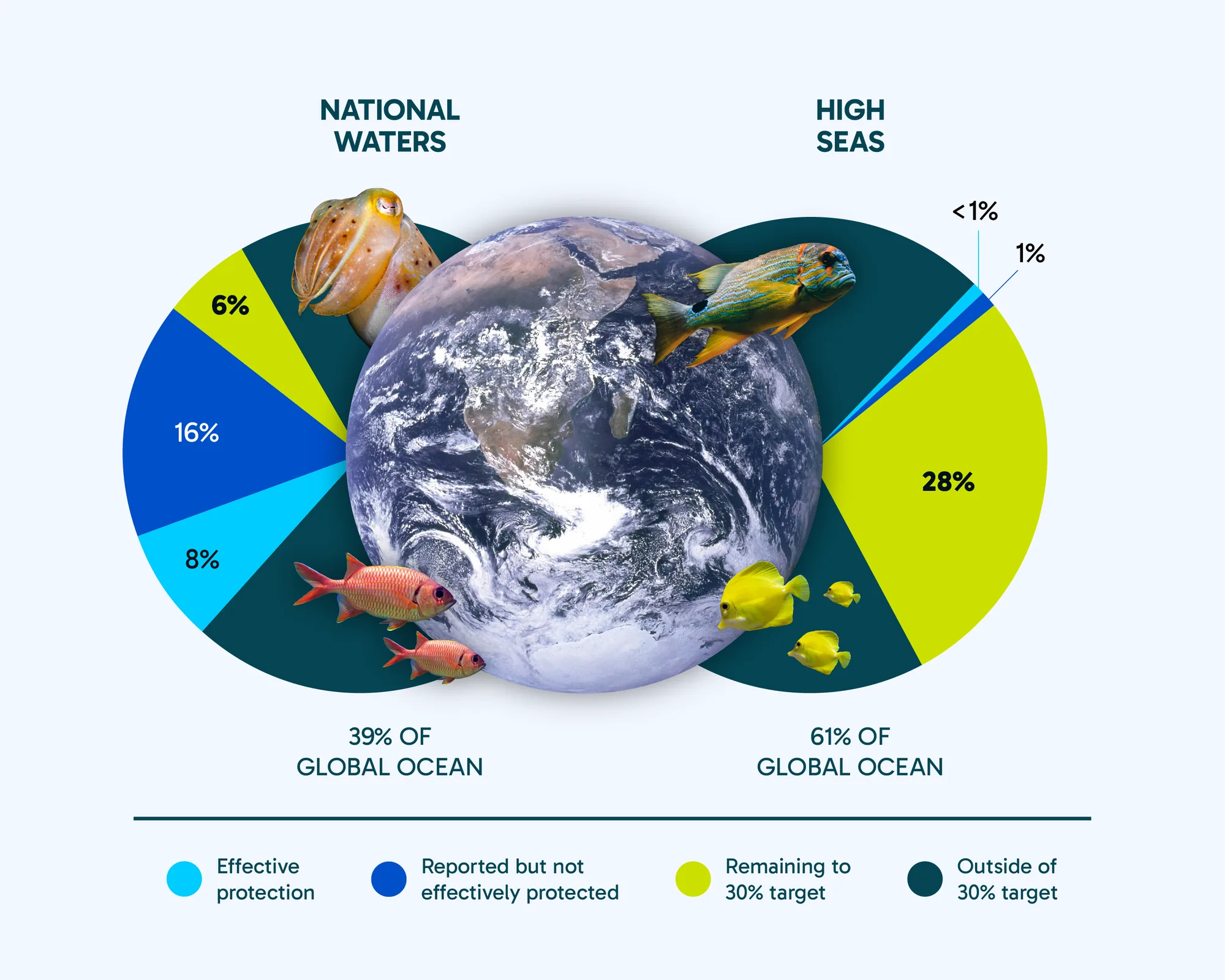
Four years from the 2030 deadline, around 10% of the ocean has been designated as protected or conserved – one third of the target.
And just 3.5% of the global ocean is assessed as effectively protected.
Progress is being made on 30×30 in the ocean, but not at the speed required. Since 2022, marine and coastal coverage has increased by approximately 1.7%. If recent trends continue, global marine coverage would reach only around 12–15% by 2030.
Reaching 30×30 will therefore require increased ambition alongside much faster implementation – in both national waters and on the high seas.
At a glance
10%
of the global ocean is currently designated as protected or conserved

3.5%
of the global ocean is assessed as effectively protected
~12%
could be designated by 2030 if existing quantified national commitments are delivered

Three gaps stand between today and 30×30 in the ocean
More ocean must be protected. Designation must become effective protection. And finance must follow.
The Ocean Protection Gap Report identifies three connected challenges that must be addressed to deliver 30×30 in the ocean: the ambition gap, the implementation gap, and the finance gap. Together, these form the ocean protection gap.
Around half of coastal countries currently have a timebound and quantified national ocean protection target. Even if existing quantified national commitments are fully delivered, global marine and coastal protection would reach only around 12% by 2030 – far short of 30%.
Closing that gap will require governments to raise ambition both within and beyond national borders.
The High Seas make up around two-thirds of the global ocean but remain largely absent from existing protection commitments. The High Seas Treaty creates the first legally binding global framework for conserving biodiversity in these waters – opening a major new pathway to expand protection before 2030.
What needs to happen
Governments must increase national 2030 targets where ambition falls short, and use the High Seas Treaty to advance a first wave of effectively protected areas in priority high-seas ecosystems.
“With less than 2% of the High Seas protected, implementing the High Seas Treaty that entered into force earlier this year, represents the biggest opportunity to supersize progress towards 30×30.”
Rebecca Hubbard, Director of the High Seas Alliance
Designation is not the same as protection.
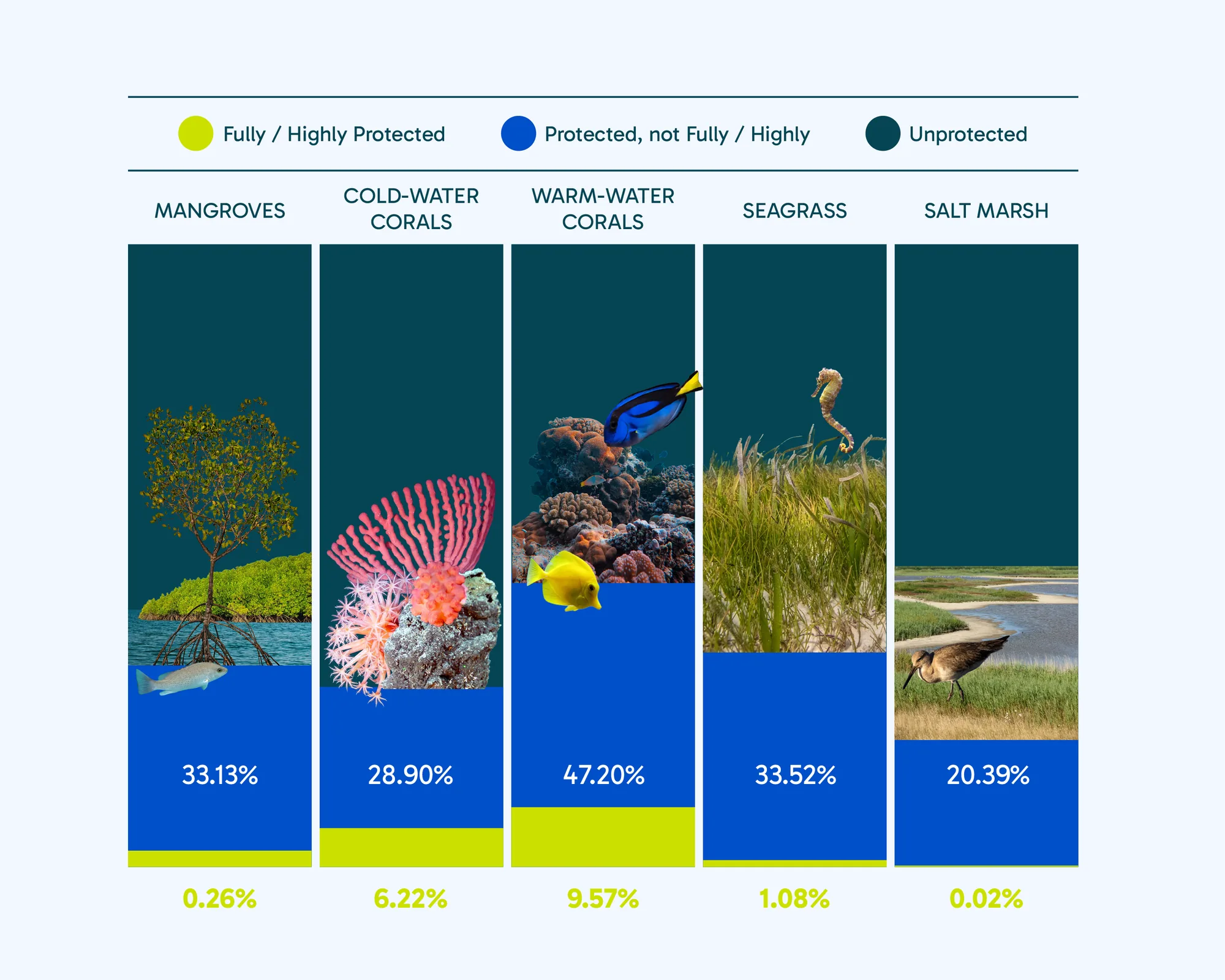
Around 10% of the global ocean is designated for conservation, but just 3.5% is currently assessed as effectively protected, using fully and highly protected areas as a proxy. In many areas counted towards global conservation targets, destructive activities such as bottom trawling continue.
The gap is particularly striking in some of the ecosystems protection is intended to safeguard. Around 33% of mangroves are reported as protected, yet just 0.3% are fully or highly protected. For seagrass, the figures are 34% and 1.1%. And while 47% of warm-water corals fall within protected areas, less than 10% are fully or highly protected.
What needs to happen
Governments must strengthen existing protected and conserved areas through effective management, equitable governance, sufficient long-term finance, monitoring, and enforcement, while ensuring new protected areas in national waters are designed to deliver effective protection. As protection expands in the High Seas, these conditions must be built into the first generation of protected areas from the outset.
“Designation alone is not enough. The majority of existing marine protected areas are still not delivering effective conservation.”
Lance Morgan, President, Marine Conservation Institute
Protection cannot be implemented or sustained without finance.
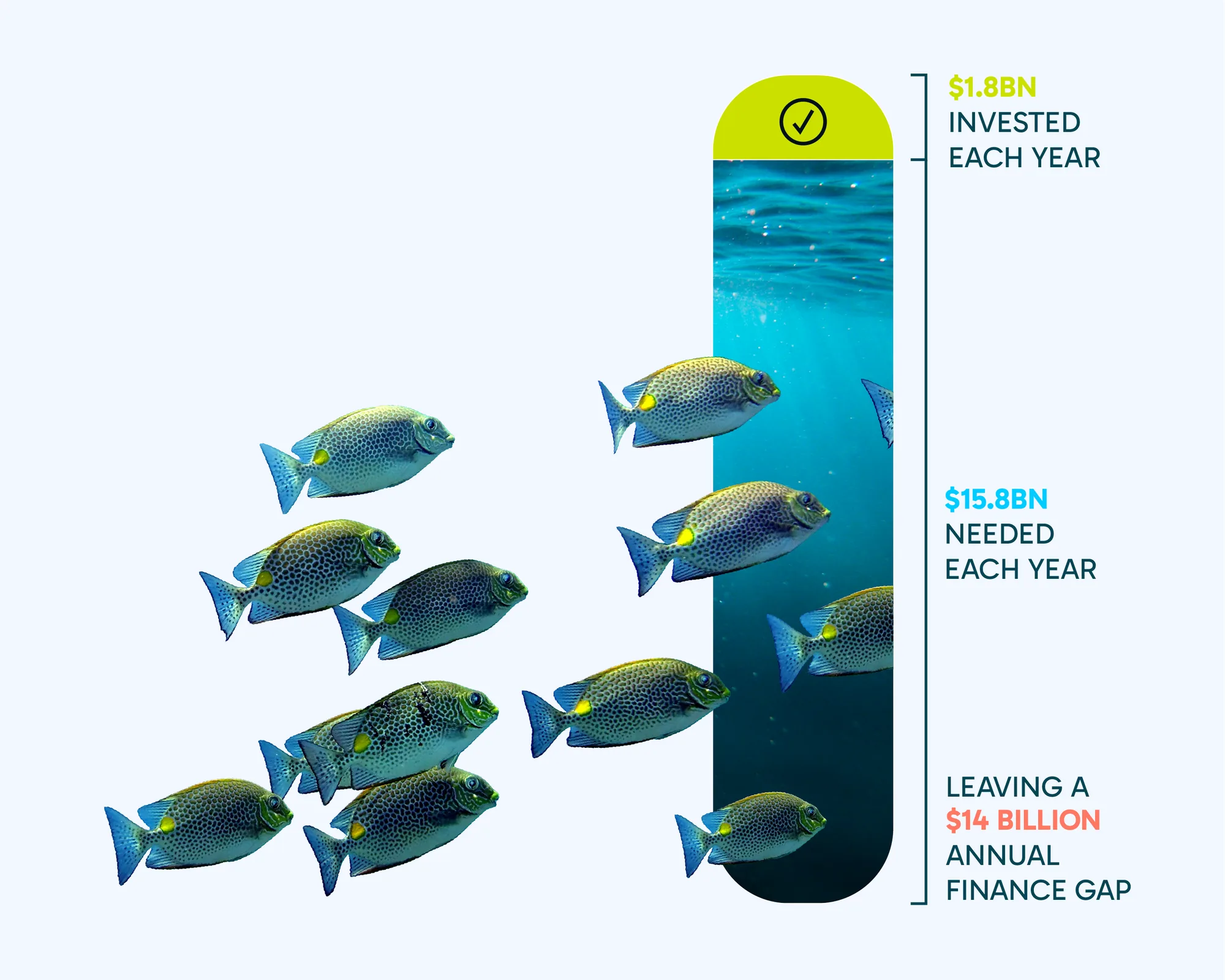
Delivering marine 30×30 is estimated to require approximately USD $16 billion annually. Current spending is estimated at only around USD $1.8 billion, with 9-10 times more funding needed to match global ambition with the resources required to deliver it.
The solutions are not starting from zero. Domestic public budgets, conservation trust funds, Project Finance for Permanence, debt conversion, and blended finance all provide models that can support conservation. At the same time, new technology is helping to reduce the cost of protecting and managing ocean areas. The challenge is increasingly one of political will: deploying proven approaches at much greater speed and scale.
Previous analysis identified at least US $85 billion in potential annual economic benefits by 2050 from healthier fisheries, coastal protection, and conserved blue carbon ecosystems.
What needs to happen
Governments, donors, philanthropies, and private-sector actors must substantially increase long-term finance for marine conservation and connect funding more directly to credible implementation plans.
30% only matters if it delivers real protection
A line on a map is the beginning of ocean protection, not the end.
For 30×30 to deliver for biodiversity and people, protected and conserved areas need effective management, equitable governance, long-term finance, and safeguards against destructive activities. They also need to protect the places that matter most – from threatened-species habitats and migratory corridors to reefs, mangroves, seagrass, and deep-sea ecosystems.
The second half of the decade must be defined by delivery
Governments have agreed the destination. The priority now is turning 30×30 into effective protection on the water.
The pathway is clear: increase ambition where commitments fall short, implement the protection already promised, use the High Seas Treaty to accelerate action beyond national waters, and mobilize the finance required to make conservation last.
Governments and political leaders must:
- Make 30×30 a political priority through the remainder of the decade.
- Translate national targets into mapped, costed, financed, and timebound implementation plans.
- Increase ocean-protection ambition where current commitments fall short, prioritizing important and underrepresented ecosystems and areas of high biodiversity value.
- Ratify and move rapidly to implement the High Seas Treaty, including advancing credible proposals for a first wave of high-seas marine protected areas.
- Ensure new and existing protected and conserved areas are effectively managed, equitably governed, monitored, enforced, and financed for the long-term.
- Recognize and support the rights, leadership, knowledge, and conservation contributions of Indigenous Peoples and local communities, including through direct access to finance.
- Report transparently on protection, management effectiveness, governance, finance, and biodiversity outcomes.
Funders and donors must:
- Scale finance towards the approximately USD $16 billion required annually for marine 30×30, compared with around USD $1.8 billion in current annual spending.
- Prioritize long-term funding that enables protected areas to move from designation to effective implementation.
- Scale proven mechanisms including conservation trust funds, Project Finance for Permanence, debt conversion, and blended finance.
- Connect funding to credible national implementation plans and conservation outcomes, rather than coverage alone.
- Support the scientific cooperation, monitoring, enforcement, and implementation capacity required to turn the High Seas Treaty into effective protection.
Partners, NGOs and civil society must:
- Keep 30×30 implementation visible and accountable through the 2030 deadline.
- Support governments and rights-holders to turn commitments into practical, spatially explicit, and financed conservation plans.
- Champion protection that delivers measurable biodiversity outcomes rather than nominal gains in coverage.
- Help build political and financial support for ambitious implementation of the High Seas Treaty.
- Support and amplify Indigenous Peoples and local communities as rights-holders, governance partners, and conservation leaders.
- Use transparent data and evidence to track progress and identify where action is falling behind.
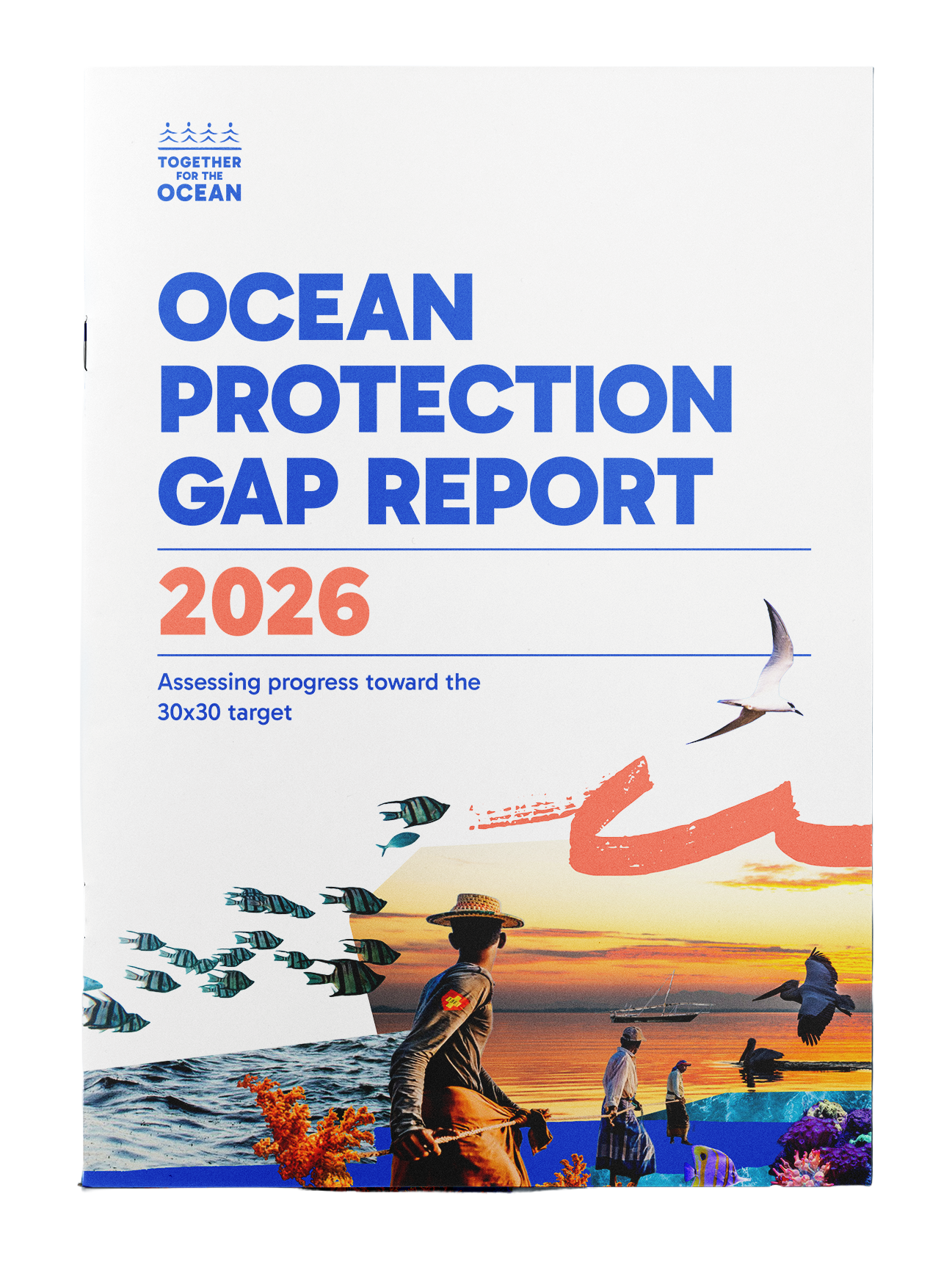
OCEAN PROTECTION GAP REPORT 2026
The complete analysis of progress, gaps, and pathways towards effective ocean protection by 2030.
Download the evidence, headline statistics, and materials you need to use and share the findings.
Authored by Systemiq.
Produced in partnership with the Bloomberg Ocean Fund, Campaign for Nature, Marine Conservation Institute, RISE UP, SkyTruth and WWF International in association with the Together for the Ocean campaign.
Press release
Read the headline findings and announcement of the 2026 report.
Report toolkit
Messaging, social assets, summary resources, and FAQs to help you communicate the findings.
Perspectives on closing the ocean protection gap
30×30 will only be delivered through coordinated action – across governments, Indigenous Peoples and local communities, conservation organizations, funders, scientists, and civil society.
Explore the evidence, ideas, and action behind 30×30
Follow the latest analysis and perspectives on what it will take to close the ocean protection gap to 2030.
Download the 30×30 Global Assessment report
Led by Campaign for Nature in collaboration with Together for the Ocean, explore the latest evidence on protected and conserved areas, national commitments, conservation outcomes, finance and implementation pathways to assess global progress towards the 30×30 target.
Access the 30×30 Global Assessment Dashboard
Led by Campaign for Nature in collaboration with Together for the Ocean, explore the latest evidence on protected and conserved areas, national commitments, and conservation outcomes on this interactive dashboard.
Explore the Marine 30×30 Dashboard
See the latest data on global marine protection and track progress beyond the point-in-time snapshot captured in this report.
View previous editions of the Ocean Protection Gap Report
Explore earlier editions of the Ocean Protection Gap Report and track how the picture has changed.
ABOUT THE REPORT
The Ocean Protection Gap Report 2026 is authored by Systemiq and produced in partnership with the Bloomberg Ocean Fund, Campaign for Nature, High Seas Alliance, Marine Conservation Institute, RISE UP, SkyTruth, and WWF International, in association with the Together for the Ocean campaign.
It builds on the methodology and approach established in the previous Ocean Protection Gap Report.
The report uses the Marine Conservation Institute’s MPAtlas analysis of fully and highly protected zones as a proxy for the share of the ocean that is effectively protected. This distinction is important: areas designated for conservation are not necessarily managed or regulated at a level that delivers effective protection from destructive activities.
Author: Systemiq
Publication: Together for the Ocean
Publication date: 23 September 2026