Marine 30x30 Data Dashboard
This dashboard highlights the latest data on progress and gaps to deliver 30x30 in the ocean. Filter by region or country to gain quick access to the latest insights and click through to Together for the Ocean partner tools to dive deeper into the data.

But only
Members of the High Ambition Coalition for Nature and People including the European Commission
High Seas Treaty ratifications, including the EU
of ocean designated as protected and conserved
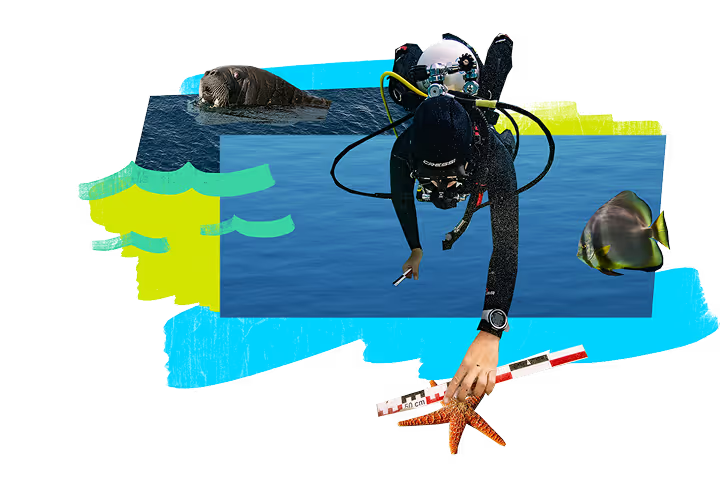
Nearly 200 countries have committed to protect and conserve at least 30% of the ocean by 2030. Achieving 30×30 now depends on turning this commitment into urgent action, in partnership with Indigenous Peoples and local communities.
Scroll to reveal the latest data on international funding supporting protected and conserved areas.
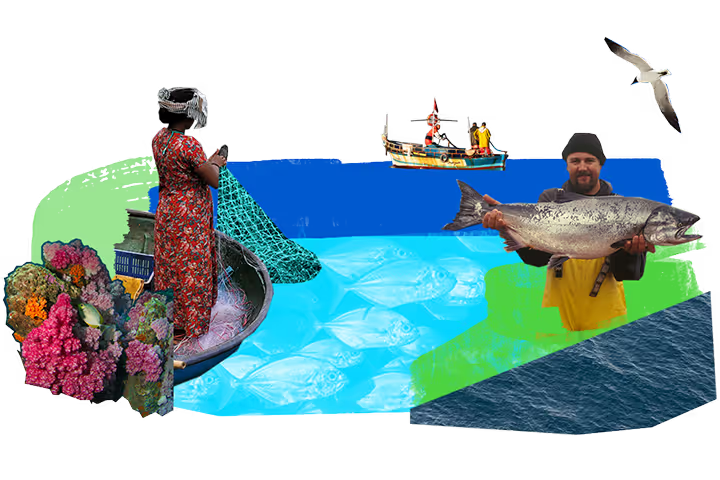
International funding for marine 30x30
Between 2014 and 2024
of international funding supported protected and conserved marine areas in countries eligible for official development assistance¹
Globally, protecting 30% of the ocean could unlock around $85 billion per year by 2050 in avoided costs and annual returns from just three key benefits alone: preserving natural coastal defences, avoiding carbon emissions from seagrass loss, and restoring overexploited fisheries.²
Repurposing fishing subsidies from just 10 countries could fully fund global ocean protection efforts. In addition, six proven financing tools – including blue bonds and debt-for-nature swaps – could unlock $18 billion in new capital.²


International funding for marine 30x30
Between 2014 and 2024
of international funding supported protected and conserved marine areas in countries eligible for official development assistance¹
Globally, protecting 30% of the ocean could unlock around $85 billion per year by 2050 in avoided costs and annual returns from just three key benefits alone: preserving natural coastal defences, avoiding carbon emissions from seagrass loss, and restoring overexploited fisheries.²
Repurposing fishing subsidies from just 10 countries could fully fund global ocean protection efforts. In addition, six proven financing tools – including blue bonds and debt-for-nature swaps – could unlock $18 billion in new capital.²
to deliver 30x30 in the ocean²
Designated protection is calculated by the percentage of regions reported as protected or conserved through marine protected areas (MPAs) and other effective area-based conservation measures (OECMS). This includes fully/highly protected areas, lightly protected areas, minimally protected areas, and areas where protection levels have not been fully assessed.
Fully or highly protected ocean is calculated by the percentage of designated protections where no or minimal extractive or destructive industries are allowed, with all other abatable impacts minimized.
These areas act as underwater sanctuaries, restricting activities like bottom trawling to allow biodiversity to recover and thrive.
A designated, legally managed section of the ocean - from coasts to the high seas - established with the aim of protecting habitats, species, and ecosystems from damaging human activities. Within MPA designations, there are varying levels of protection.
A geographically defined area other than a Protected Area, which is governed and managed in ways that achieve positive and sustained long-term outcomes for the in situ conservation of biodiversity, with associated ecosystem functions and services and where applicable, cultural, spiritual, socio–economic, and other locally relevant values. Because this definition was only recently adopted, most countries have not yet provided data to the World Database on OECMs. Importantly, this does not mean that no OECMs exist in those countries, but they are yet to be identified.
The High Seas Treaty (The Agreement under the United Nations Convention on the Law of the Sea on the Conservation and Sustainable Use of Marine Biological Diversity of Areas beyond National Jurisdiction or BBNJ Agreement), which entered into force on 17 January 2026, is a legally binding UN agreement designed to support the conservation and management of marine biodiversity in international waters covering 64% of the ocean. It establishes the first framework for creating MPAs in the high seas, requires environmental assessments for deep-sea activities, and ensures equitable sharing of marine genetic resources. The use of the term "High Seas Treaty" acknowledges the scope of the BBNJ Agreement that encompasses all areas beyond national jurisdiction, including the seafloor and water column. This choice of wording is intended to ease understanding for broad audiences and does not convey a prioritization among the components or principles of the BBNJ Agreement.
Activities included in this analysis are funding originating in high-income countries (HICs) directed towards activities in ODA-eligible countries, funding for activities that are explicitly designated for in-situ biodiversity conservation through protected areas (PAs), OECMs, and Indigenous and Traditional Territories (ITTs), and funding flows from donor governments (bilateral and multilateral flows) and philanthropic organizations. Broader sources of international or domestic finance for 30x30 from the private sector, commercial financial institutions, carbon / biodiversity markets, etc. are not included in this analysis.
The financing need for national MPAs is based on Waldron et al. 2022, with constant 2015 US dollar values adjusted for inflation to 2023 using World Bank data. While the financing need for high seas MPAs is based on Blue Nature Alliance’s 2022 analysis, which was also adjusted to 2023 values, due to limited data on how MPA costs vary by country and over time, the final estimate of $15.8 billion per year may slightly over or underestimate true costs.
A National Biodiversity Strategy and Action Plan (NBSAP) is the principal instrument for implementing the Convention on Biological Diversity (CBD) at the national level. It is a strategic document where countries outline how they plan to conserve biodiversity, sustainably use its components and ensure equitable sharing of benefits. NBSAPs translate global targets such as the Kunming-Montreal Global Biodiversity Framework (GBF) into national, actionable steps.
