From Kenya to the world: Why Communities Hold the Key to Ocean Protection
I grew up in Nyeri County, central Kenya, surrounded by rivers, forests, and fertile landscapes that shaped not only my childhood, but also my understanding of our connection with nature. As a little girl, I remember clean streams and rivers flowing freely, tall trees forming a green ceiling above us creating shade, and wildlife thriving as part of our communities. It was not uncommon to spot “thia” as we would call them in my native language, the small antelopes that would wander into our farms from nearby forests, reminding us of how closely people and nature coexisted. Nature was not separate from us. It fed our families, carried our stories, supported livelihoods, and grounded us in a sense of belonging.
But over time, I have watched these landscapes change and our wildlife disappear.
Rivers became smaller, forests shrunk, and seasons became less predictable. What had once felt permanent suddenly felt fragile. Even as a child, I understood that environmental destruction was not an abstract issue. It affected people directly, especially ordinary families already working hard to survive. That understanding has stayed with me ever since.
I have also come to understand that what happens to our forests, rivers, and lands eventually reaches the ocean. Nature is deeply interconnected, and when one ecosystem suffers, the effects ripple far beyond what we can immediately see.
Today, as Kenya prepares to host the 11th Our Ocean Conference (OOC11), I see another important moment unfolding – not just for my country, but for the future of global ocean protection and conservation. The world has committed to protecting at least 30% of the ocean by 2030, but targets alone will not save the ocean. Real protection happens through people, communities, and those living closest to and stewarding the ecosystems at risk.
That is why hosting OOC11 in Kenya matters so much to me.
AFRICA IS NOT ON THE SIDELINES OF OCEAN PROTECTION
For many years, global conservation conversations have often positioned Africa as a recipient of solutions rather than a source of them. Yet across my continent, communities have protected ecosystems for generations through local stewardship, traditional knowledge, and a deep understanding of the natural world around us.
Africa is home to some of the planet’s most important marine ecosystems. Our mangrove forests, coral reefs, seagrass meadows, and coastal wetlands support biodiversity that the entire world depends on – even if they do not realize it. Millions of people also rely directly on these ecosystems on a daily basis for food, employment, culture, and survival.
At the same time, African communities are among the most exposed to climate impacts. Rising sea levels, a warming ocean, extreme weather, and declining fish stocks are already affecting livelihoods along our coastlines. This means Africa is not standing at the edges of the 30×30 agenda. It is central to it.
By bringing OOC11 to Kenya, the world has an opportunity to listen more closely to the people already doing the work of conservation every day.
It is also an opportunity to recognize that some of the most effective conservation solutions are already being led by local communities, women, and young people across Africa.
THE OCEAN IS PERSONAL
When people speak about protecting the ocean, discussions often focus on numbers, policies, and designated protected areas. Those things matter. But for coastal communities in Kenya, the ocean is also deeply personal.
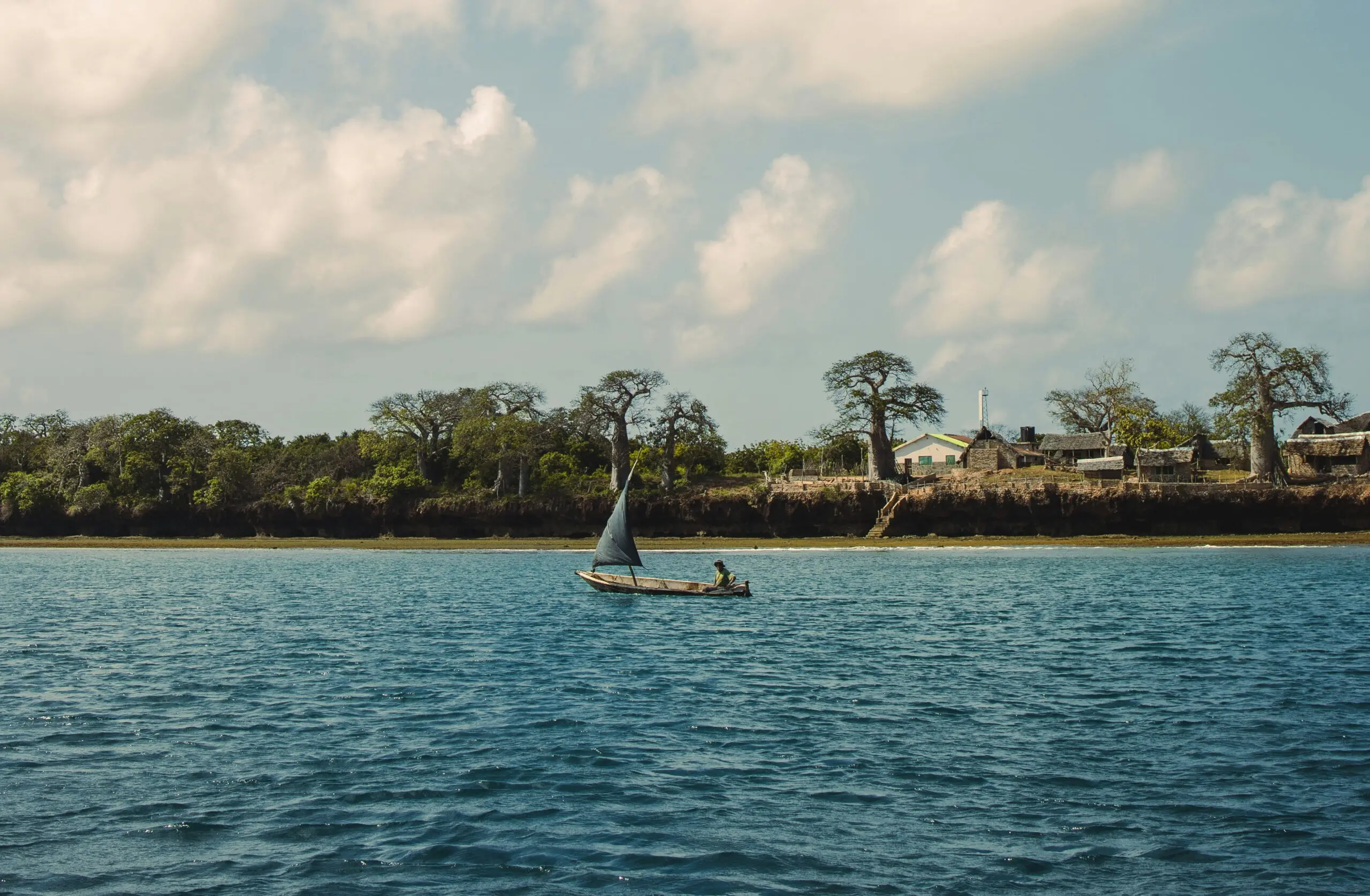
It is the fishermen who wake before sunrise, hoping for a safe return and a catch large enough to feed their families. It is the mother selling seafood at a local market to pay school fees. It is the young person whose future depends on whether marine ecosystems survive another generation to give them work.
Along Kenya’s coastline, these ecosystems are a vital lifeline. One example of this is the Sabaki River Estuary, a wetland connecting the Athi-Galana-Sabaki River and the Indian Ocean that supports mangrove forests, fish nurseries, migratory birds, and abundant marine biodiversity. But these ecosystems are increasingly threatened by deforestation, pollution, unsustainable development, and climate change.
When the mangroves disappear, communities lose more than trees. They lose protection from storms and coastal erosion, their fisheries decline, and their livelihoods become more fragile. Climate impacts become harder to survive.
That is why restoration work matters so deeply.
RESTORING MANGROVES, RESTORING HOPE
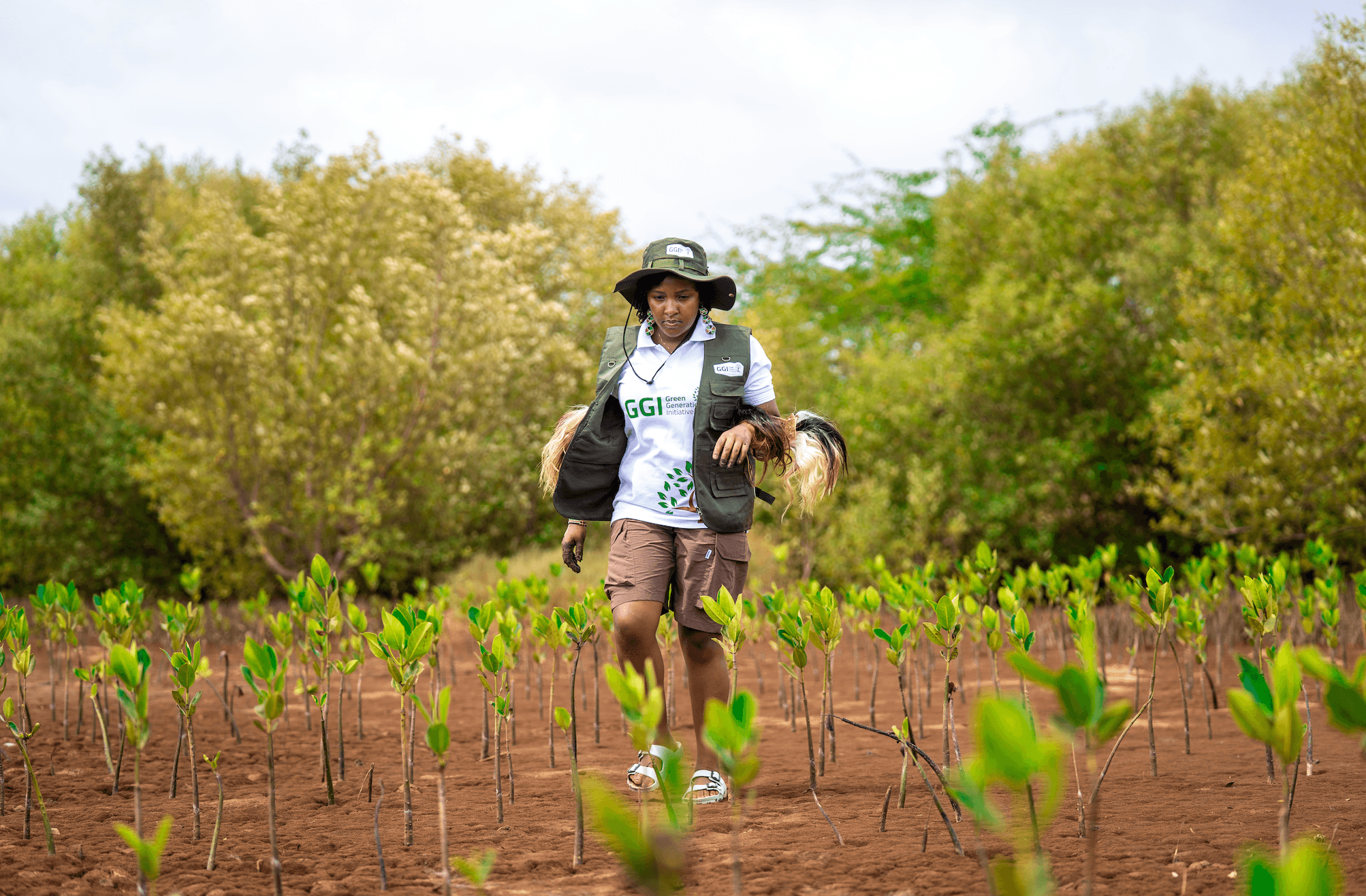
Through the Green Generation Initiative (GGI), I have had the privilege of working alongside coastal communities, restoring mangrove ecosystems in Kenya, such as the SAMAHCO, Sabaki Mangroves, and Hippo Camp Women and Youth Group. Some of the most inspiring people I have met through this work are women and young people who refuse to give up on their environment despite the challenges they face.
I think of the single mothers carefully tending mangrove seedlings under the hot coastal sun, knowing that the work they are doing today could help secure livelihoods tomorrow. I think of young people choosing conservation leadership at a time when many feel anxious about the future of the planet. And I think about the power of communities coming together around a shared purpose.
These projects are not simply environmental interventions. They are acts of resilience and dignity.
Mangrove restoration is helping strengthen biodiversity while also creating opportunities through wider activities like beekeeping, aquaculture, ecotourism, and emerging blue carbon initiatives. It shows that protecting nature and supporting economic wellbeing are not opposing goals. In fact, they depend on one another.
This is one of the most important lessons the world must carry into the future of ocean protection.
CONSERVATION CANNOT BE DONE TO COMMUNITIES
Too often, conservation has been designed far away from the people most affected by it. Marine protected areas often exist more effectively on maps than in reality, without the financing, enforcement, or community ownership needed to succeed long-term.
Communities cannot simply be consulted after decisions are made. They must be meaningfully involved in shaping those decisions and be trusted as leaders from the start. Often, they are already protecting the area in question without recognition or formality.
The future of the 30×30 target depends not only on expanding protected areas, but on ensuring protection is equitable, effective, and locally led. That requires long-term investment in grassroots organizations, youth leadership, women-led initiatives, and community governance systems, and an understanding that we must prioritize improving the livelihoods of the communities while we restore and ensure investments flow towards livelihoods too.
It also requires humility from the international community; a willingness to recognize that expertise does not only exist in institutions or conference halls. It is lived and breathed everyday by millions of Indigenous and coastal peoples.
OOC11: A LEGACY BEYOND COMMITMENTS
As the world gathers in Kenya for OOC11, I hope this conference leaves behind more than speeches and announcements.
I hope it leaves a deeper understanding that ocean protection is ultimately about people. Families trying to build secure futures. Communities protecting ecosystems they have depended on for generations. Young people demanding a healthier planet – not someday, but now.
Kenya’s coastal communities already hold many of the solutions the world is searching for. The responsibility of the global community is not to speak for them, but to stand beside them with investment trickling down to the communities, partnerships, and trust.
Because the future of the ocean will not be secured by commitments alone. It will be secured by people who choose, every day, to protect what they love.
About the author
Elizabeth Wathuti is a Kenyan environmentalist, climate leader, and the founder and CEO of the Green Generation Initiative (GGI), an action driven organization working with communities to restore and protect degraded water catchment areas and landscapes while improving community climate resilience and improving livelihoods. She is internationally recognized for her advocacy on climate justice, nature-based solutions, and community-led conservation. Elizabeth has addressed global platforms including the United Nations Climate Change Conference (COP26) World Leaders Summit, where her speech on the human impact of the climate crisis gained global attention. Her work centers on restoring ecosystems and promoting biodiversity, empowering young people and local communities and championing African leadership in climate and environmental action. As a respected voice from the Global South, Elizabeth brings critical perspective and credibility to global ocean and climate advocacy.
Related content
 Four years to 2030: scaling effective ocean protection
 Why 30×30 Depends on Local Leadership
 Our Ocean Conference: Why Kenya Is Calling on the World to Protect the Ocean
Share this article
using #ForTheOcean