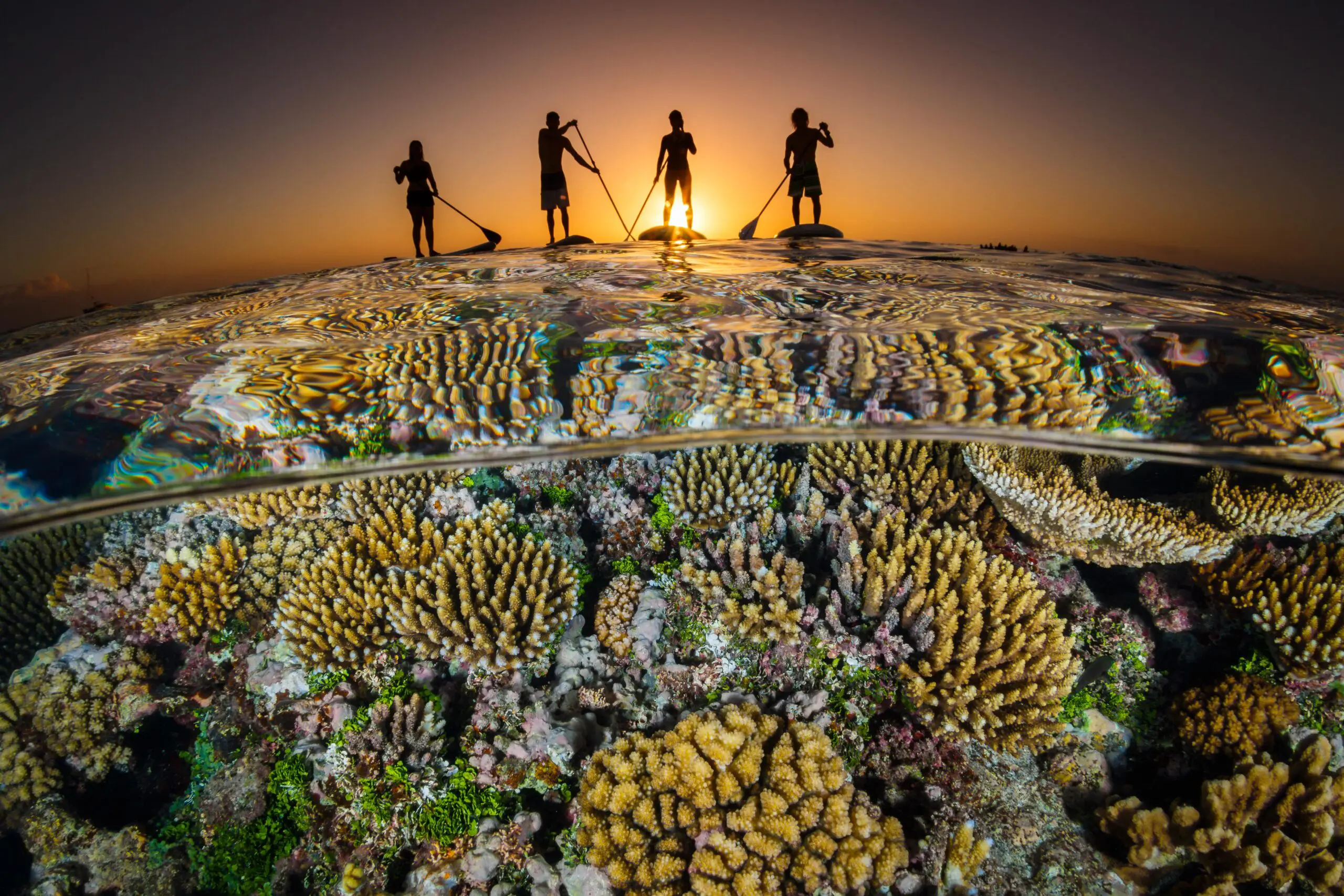
30×30 in the ocean: Reflecting on ocean protection progress in 2025
The ocean is essential to life on Earth. It regulates the climate, supports global food systems, powers local economies, and sustains livelihoods. The global community has coalesced around a clear science-backed target: protect and conserve at least 30% of the world’s ocean by 2030 (30×30). More than a milestone, achieving 30×30 is a planetary imperative to ensure the ocean and the people that depend on it can thrive. In 2025, the urgency to secure its health became impossible to ignore.
GAINS IN MARINE PROTECTED AREA COVERAGE
In January 2025, only 8.2% of the ocean was designated as protected. As of December 2025, that figure has climbed to 9.9% – the biggest single-year jump in nearly a decade. New marine protected area (MPA) designations across the Pacific, Atlantic, and Indian Oceans accounted for much of this progress, including major national commitments in French Polynesia with what is now the world’s largest MPA. Other local protections were also established, including the Panaon Island Seascape in the Philippines and the expansion of fully protected marine sanctuaries in Australia’s South-East Marine Parks Network, areas home to the biologically productive continental shelf and Great Southern Reef.
Regional collaboration also delivered progress. In the Western Indian Ocean, countries advanced network-level protections in shared waters across the region and Latin American countries continued building momentum towards a connected set of MPAs in the Eastern Tropical Pacific (ETP).
MOMENTUM BEHIND THE HIGH SEAS TREATY
This multilateral cooperation in 2025 also extended to the Biodiversity Beyond National Jurisdiction (BBNJ) agreement, commonly known as the High Seas Treaty, which provides for the first time an overarching framework for establishing fully and highly protected areas in shared waters – areas that make up 61% of the global ocean.
Reaching the 60 country ratifications required to bring the Treaty into force at the UN General Assembly in September 2025, the Treaty received a historic wave of support and went on to become a winner of The Earthshot Prize. At the time of writing, it has now been ratified by 78 nations and the European Commission and will enter into force on 17 January 2026.
The Treaty is vital to achieving the marine 30×30 goal and restoring the health and resilience of the global ocean. All countries should ratify the Treaty, participate in the first Conference of Parties, and work together to ensure it is effectively implemented through a strong, transparent, equitable, and efficient institutional framework.
CAMPAIGNERS MOBILIZING FOR EFFECTIVE PROTECTION
This year also shone a spotlight on issues of implementation. While nearly 10% of the ocean is protected, just 3.1% is effectively safeguarded with destructive practices such as bottom trawling continuing in supposedly protected areas, or ‘paper parks’.
In March, campaigners united in a Week of Ocean Action to demand change. A new study from National Geographic Pristine Seas was released, exposing a net cost to European society of up to €11 billion every year from bottom trawling, with 60% of European MPAs still subject to the destructive fishing method. Some progress followed with the EU General Court upholding its bans on deep‑sea fishing including bottom trawling, but action to ban the fishing method in protected areas is still falling short.
STEPS NEEDED TO CLOSE THE OCEAN FINANCE GAP
The 2025 Ocean Protection Gap Report found that just $1.2 billion a year currently flows to ocean protection efforts – a fraction of the $15.8 billion needed annually to deliver on 30×30. Furthermore, recent analysis from Campaign for Nature, Pew Charitable Trusts and Rainforest Foundation Norway found that 30×30 in the ocean receives just 14% of international funding.
The Ocean Protection Gap Report also highlighted the differences between designating MPAs and their ongoing management. Short-term establishment costs amount to less than 5% of the total finance gap (approximately $640 million per year) whereas the ongoing management of MPAs is estimated at $15.2 billion per year. While designation is a limited, upfront investment, effective long-term management of MPAs and Other Effective Area-based Conservation Measures (OECMs) requires sustained financing to support enforcement, monitoring, and governance across both national waters and the high seas.
Despite this clear gap, ocean finance did see momentum this year: new blue bonds and increased support for long-term MPA finance mechanisms shared recognition that effective protection requires sustained resources, not just political declarations. The Blue Economy and Finance Forum (BEFF) in June 2025 saw commitments including an investment of $2.5 billion from The Development Bank of Latin America and the Caribbean in the region’s blue economy and an announcement from ORRAA that the #BackBlue Ocean Finance Commitment now covers a cumulative value of $3.45 trillion of assets. The European Commission also announced an investment of €1 billion at the 2025 UN Ocean Conference to support ocean conservation, science and sustainable fishing as part of the European Ocean Pact.
These high-level financial commitments represent an important and encouraging first step. The focus must now shift to translating ambition into action by building the right partnerships, mechanisms, and solutions that can effectively channel this financing to the conservation and protection initiatives in the water where it is most urgently needed.
OCEAN PROTECTION LESSONS FROM 2025
Looking back at 2025, there are some key lessons learned:
- Multilateralism and inclusive processes for ocean protection are essential. Many of the year’s breakthroughs happened due to strong and meaningful collaborations between countries, Indigenous Peoples and local communities, decisionmakers, NGOs, and stakeholders.
- Protection must be meaningful, backed by sustainable finance and implementation plans. The Ocean Protection Gap Report demonstrated that designating MPAs is only the first step. Monitoring and enforcement, durable financing, and inclusive management processes determine whether protections are effective and drive real outcomes.
- Small Island Developing States (SIDS) are leading the way. Localized marine management is highly effective and rooted in Indigenous tradition and knowledge. SIDS are leading the way for MPA designation and striving for better protections globally by ratifying the BBNJ Treaty and pushing for its implementation.
- Technology is transforming ocean conservation. Satellite monitoring, AI-driven vessel tracking, and remote sensing tools helped uncover illegal fishing, improve transparency at sea, and guide marine management decisions. These technologies are leveling the playing field for enforcement and management.
FIVE YEARS TO MEET 30X30 GOALS: WHAT NEEDS TO HAPPEN NOW
With five years to go until 2030, 2026 must be a year of continued decisive ambition and action for the ocean. Once the High Seas Treaty enters into force, nations must move swiftly to agree on frameworks to designate protected areas in ecologically critical regions. To meet 30×30, national policies and implementation plans must also shift into a higher gear. Countries will need to strive to integrate ocean protection into their national climate plans and national biodiversity strategies. Collaboration and capacity building will be needed for regional partnerships, promoting Indigenous-led governance, and establishing protections in critical ocean areas.
In 2026, we will continue to advance key priorities for ocean protection, including:
- Rapid development and deployment of mechanisms and capacity needed to establish high seas MPAs under the BBNJ Treaty;
- Bridging the gap between high level nature finance commitments and sustainable finance solutions that need to be developed and implemented on the ground to achieve 30×30;
- Strengthening effectiveness of MPAs, eliminating destructive activities like bottom trawling in existing and new MPAs and supporting capacity to manage areas once designated;
- Integrating marine OECMs equitably into countries’ contributions to the global 30×30 goal;
- And safeguarding and centering Indigenous rights and knowledge.
We made measurable progress in 2025, but much more hard work lies ahead. 30×30 is still within reach if we act with shared purpose towards the ambitious goal. Protecting at least 30% of the ocean by 2030 is more than a conservation target; it’s a promise to future generations and a safeguard for our planet’s life support systems.
The decisions made in 2026 will shape the health of the ocean for decades to come. Together, we will continue momentum for the ocean.
Header image credit: Grant Thomas / Ocean Image Bank

About the author
Jonathan Kelsey is director of the Bloomberg Ocean Fund, a Bloomberg Ocean Initiative partner. He also oversees the Joint 30x30 Funding Initiative regranting fund to invest in ambitious new efforts that result in effective and equitable paths towards the global target to protect 30% of the ocean by 2030. Prior to his current role, Jonathan spent over 20 years in the U.S. Government as a diplomat and policymaker advancing ocean conservation initiatives both in the United States and internationally.
Related content
 Four years to 2030: scaling effective ocean protection
 The legal fight for Europe’s marine protected areas
 A Turning Point for Ocean Protection in Ghana
Share this article
using #ForTheOcean