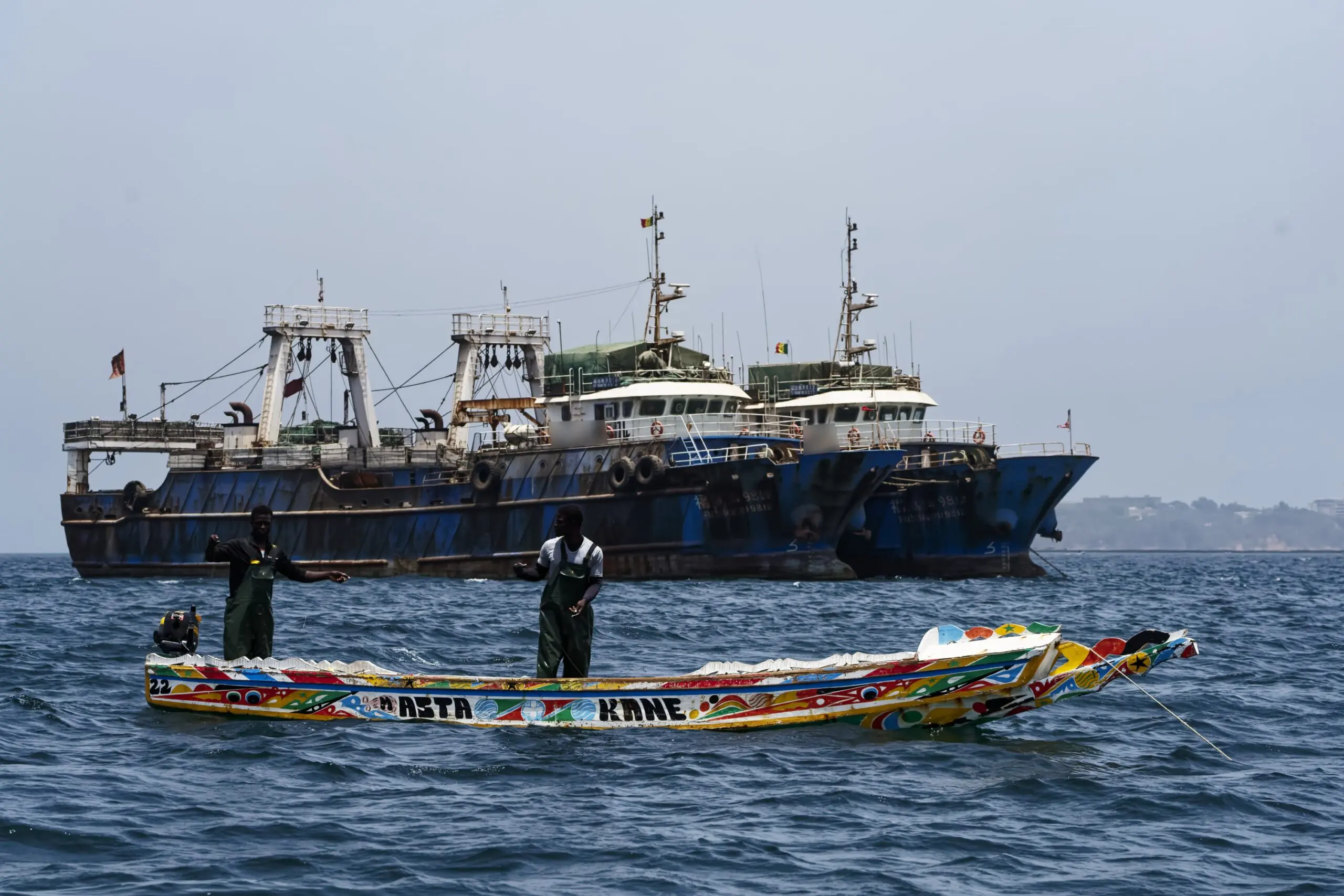
From the seafloor to the surface: Ghana leads the way in transforming bottom trawling in West Africa and beyond
In the fight for ocean justice and sustainable seas, moments of true leadership stand out like a beacon for others to follow.
Ghana’s recent commitment at the UN Ocean Conference (UNOC3) and subsequent Presidential approval to ban bottom trawling in its coastal waters represented exactly such a moment; a bold commitment that puts both people and planet at the heart of ocean governance.
The decision marked a victory for locally-led marine conservation, and for the thousands of small-scale fishers whose voices have long been drowned out by the engines of industrial trawlers. As we work toward the global target of protecting at least 30% of the ocean by 2030 in a way that works for both people and planet, Ghana’s leadership demonstrates how effective ocean protection can be rooted in community needs and rights-based approaches. And it proves that bold political will, combined with community leadership, can drive transformative change.
Moments like this challenge other nations to examine their own fishing policies and make similar commitments. Around the world, coastal communities are fighting the same battles against industrial trawling, often with limited resources and political support.
WHY A BAN ON BOTTOM TRAWLING IN MPAS IS NEEDED
To understand the significance of Ghana’s decision, we must first confront the harsh reality of bottom trawling’s impact. This destructive fishing practice involves dragging heavy nets across the seafloor, essentially clearcutting underwater ecosystems in an all-consuming pursuit of fish and other marine life.
The environmental cost is staggering: bottom trawling destroys critical habitats, releases vast amounts of carbon, and devastates the complex web of life on the ocean floor. Small-scale fisheries, that provide food security for millions and employ countless community members, find themselves competing with industrial interests that can decimate entire local fish populations.
But the damage extends far beyond biodiversity loss. For Ghana’s coastal communities, bottom trawling has meant the systematic erosion of livelihoods that have sustained families for generations.
The social cost is equally profound. When industrial trawlers deplete coastal waters, small-scale fishers are forced to venture further from shore in increasingly dangerous conditions, or to abandon fishing altogether. Communities that have lived in balance with the ocean for centuries suddenly find their traditional knowledge and sustainable practices overthrown by industrial-scale destruction.
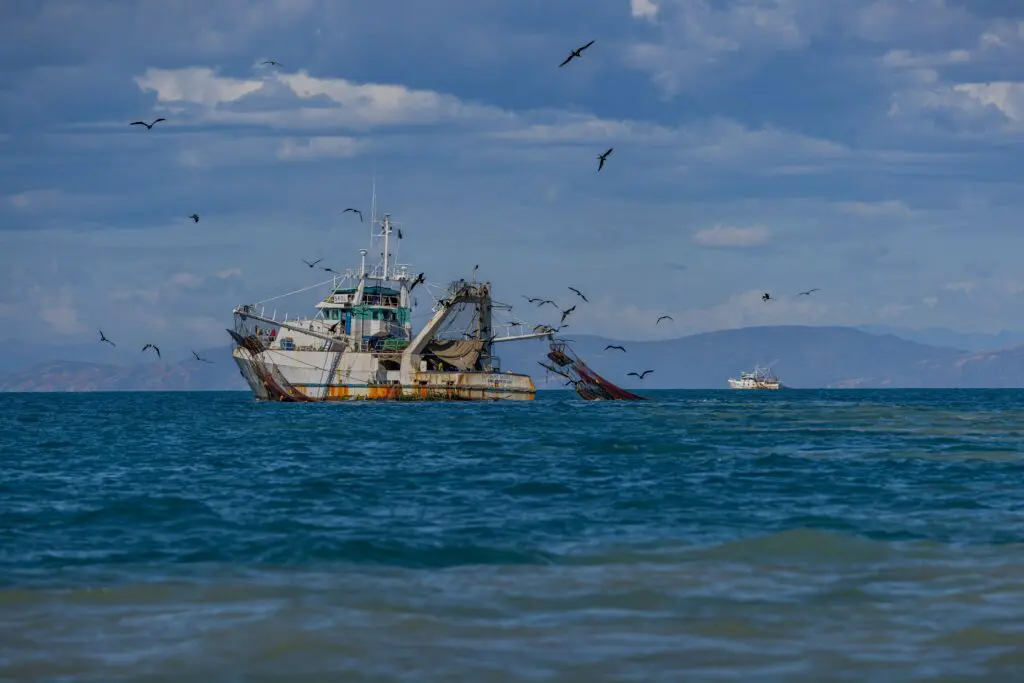
INFORMING DECISION MAKING WITH LOCAL KNOWLEDGE AND COLLABORATION
The Transform Bottom Trawling Coalition has been instrumental in bringing these community concerns to the global stage. This powerful alliance brings together organizations, researchers and, most importantly, fishing communities themselves to advocate for an end to this destruction.
At Blue Ventures, as convener of the Coalition, we’ve had the privilege of supporting locally-led advocacy that places community voices at the center of ocean governance discussions. Our approach recognizes that the people who depend most directly on healthy oceans must lead the charge for protection. Through capacity sharing, research support, and policy advocacy, we’ve worked alongside partners to ensure that community knowledge and needs inform decision-making processes.
The Coalition’s work also extends beyond advocacy to create platforms where local fishers can share their experiences directly with policymakers – facilitating discussion about survival, tradition, and the future of communities that have long stewarded ocean resources.
TRANSFORMING OCEAN POLICY INTO REALITY ACROSS THE WORLD
But what is the path forward? While Ghana’s announcement represents a critical first step, the real work now begins.
Transforming policy commitments into on-water reality requires collaborative and co-managed implementation and enforcement. This means governments and communities working together to develop monitoring systems, train enforcement personnel, and forge alternative livelihood opportunities for those currently employed in bottom trawling operations.
And whilst we celebrate this win, this must also galvanize governments worldwide. Securing the health of the ocean, and the wellbeing of the billions of people who depend on it, requires the courage to choose transformation over the status quo.
So from here, we send a call to global leadership to act – now.
We’re calling on decision-makers to urgently tackle bottom trawling, with evidence of a globally reduced footprint by 2030. To help achieve this goal, we are calling for coastal states, in consultation with fishworker organizations and other stakeholders, to:
- Establish, expand and strengthen national inshore exclusion zones (IEZs) for small-scale fishers where bottom trawling is prohibited.
- Prohibit bottom trawling in all marine protected areas (outside IEZs) to ensure vulnerable habitats and ecosystems are effectively protected and recovered.
- End subsidized bottom trawling and support a fair transition.
- Prohibit the expansion of bottom trawling to new, untrawled areas.
Together, these measures will set us on a path to marine recovery that will support healthy and diverse ecosystems, rich fisheries and vibrant coastal communities.
As the tide turns toward ocean justice, with Ghana leading the way, the question now is: who will follow their lead?

About the author
Formerly chief impact officer at Save the Children International, Ebrima is a dynamic and highly respected leader with decades of experience in impact-focussed, community-driven international development. His work with Save the Children, War Child, BAFROW and numerous other charities has helped create positive impact in more than 100 countries and has influenced hundreds of changes in policy and legislation around the world. “My journey in community development, which began in a fishing village in the Gambia, has come full circle. As a lifelong humanitarian, it’s high time we realised that the ocean emergency is a human emergency.”
Related content
 Four years to 2030: scaling effective ocean protection
 The legal fight for Europe’s marine protected areas
 A Turning Point for Ocean Protection in Ghana
Share this article
using #ForTheOcean