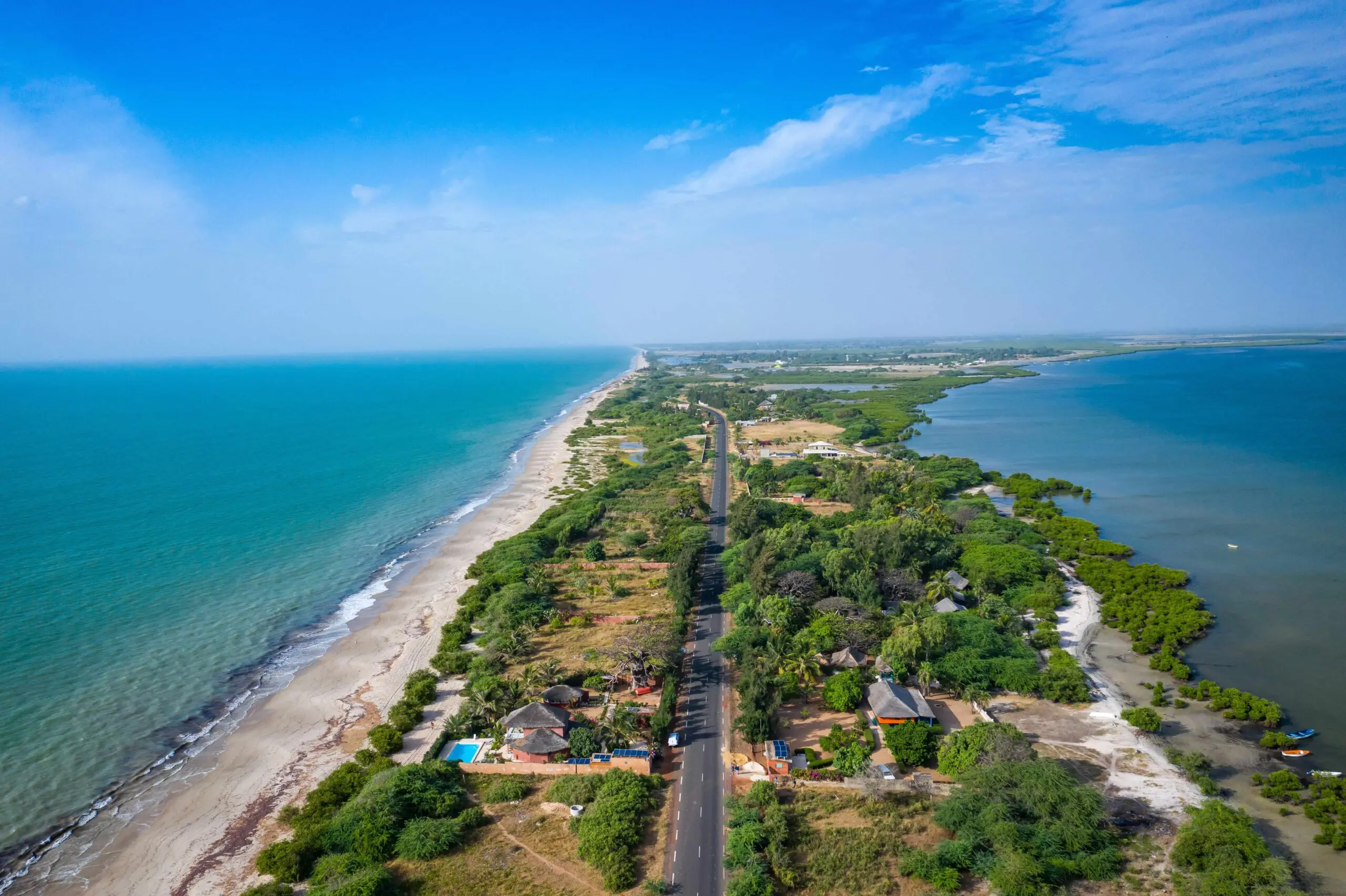
A New Era for the High Seas: West Africa’s Blueprint for Global Ocean Governance
Saturday the 17th of January marked a historic moment for the ocean. The Biodiversity Beyond National Jurisdiction (BBNJ) Agreement, commonly known as the High Seas Treaty, came into effect. This is more than a diplomatic achievement, it’s a victory for humanity, and a testament to the power of African leadership. The ocean is the lifeblood of our planet, and for West Africa, it is the heartbeat of our communities.
For the first time, the international community now has a legally binding framework to conserve and sustainably manage marine biodiversity beyond national jurisdiction, which make up nearly two-thirds of the global ocean.
Entry into force is more than a cause for celebration: it is a call to action.
WHY ENTRY INTO FORCE MATTERS
The High Seas Treaty was negotiated to fill a critical gap in international law. While coastal States have jurisdiction over their territorial waters and Exclusive Economic Zones, vast areas of the ocean beyond these zones remain largely unregulated, a “wild west” with few legal protections. This governance vacuum has left the high seas vulnerable to overfishing, illegal activities, pollution, and emerging threats such as deep-sea mining.
Now that the Treaty has entered into force, our aspirations to protect the high seas can become legally binding international law. Countries that have ratified can and must now begin implementing the treaty’s core mechanisms, including designating and managing marine protected areas (MPAs) on the high seas, conducting environmental impact assessments, funding capacity building, and sharing the benefits from marine discoveries that may transform medical treatment or lead to new commercial products.
Entry into force transforms ambition into obligation and vision into action.
WEST AFRICA IS PAVING THE WAY FORWARD
West Africa has emerged as a global leader in advancing the High Seas Treaty. At the time of writing, twelve West African countries have signed the Treaty, and seven have already ratified it, making our region the most represented bloc among BBNJ Parties in the world.
For our region, the high seas are not distant or abstract. They are directly linked to the survival, food security, and livelihoods of millions of coastal communities. They are home to unique biodiversity and support commercially important fish stocks that sustain local economies. Protecting the high seas is protecting our people. But our high seas have benefits that extend far beyond our shores; they are crucial for regulating the global climate and produce half of the world’s oxygen.
SECURING 30X30 DEPENDS ON HIGH SEAS PROTECTION
Establishing highly and fully protected MPAs in international waters is essential for achieving the global “30×30” goal: protecting at least 30%of the world’s ocean by 2030. Just 1.5% of the high seas are currently protected – without action beyond national borders, this target will remain out of reach.
Science shows that well-managed MPAs restore fish populations, safeguard endangered species, and strengthen resilience to climate change. For Nigeria and other countries in the region facing mounting pressure from illegal fishing, pollution, and climate impacts, MPAs are not optional; they are urgent.
FROM HIGH SEAS TREATY TO ACTION: THE WEST AFRICA PROPOSAL
A top priority for our Sub-region is a proposal for a highly and fully protected high seas MPA in the Convergence Zone of the Canary and Guinea Currents. This ecologically rich area stretches from Cape Verde and Senegal to Nigeria and São Tomé and Príncipe, encompassing a biologically productive transition zone between temperate and tropical systems.
This convergence zone is a migration corridor, spawning ground, and nursery for many species, while also influencing regional climate and rainfall patterns. Its protection will deliver widespread benefits and help safeguard the ecological connectivity upon which coastal fisheries depend.
Our MPA proposal sets a strong precedent for quality protection instead of seeking to create another “paper park” that exists only on maps but offers no real protection in the water. Through this proposal, the international community has the opportunity to show how the Treaty can deliver real, enforceable conservation outcomes and we must all come together to seize the opportunity.
EARLY ACTION: SETTING THE STANDARD FROM DAY ONE
With 2030 fast approaching, delay is not an option. The first wave of MPA proposals under the Treaty will define its credibility and ambition. While we wait for remaining countries to ratify, implementation must begin. In Nigeria has enshrined stakeholder engagement at every level of the BBNJ process. Nigeria is commitment to strong ecological criteria, robust enforcement mechanisms, fair benefit-sharing arrangements, and protecting local livelihoods guides every decision.
We recognized that capacity and resource constraints have slowed marine protection efforts in the past. The absence of MPAs in some national waters reflects these challenges, not a lack of political will. With increased access to finance, regional cooperation, and international support, we are now positioned to accelerate action both nationally and on the high seas.
THE IMPACT OF THE HIGH SEAS TREATY FOR AFRICA AND THE GLOBAL SOUTH
The High Seas Treaty has transformative potential for the Global South. It creates pathways for developing countries to shape decisions, access technology, build scientific capacity, and share fairly in the benefits arising from marine genetic resources. High seas protection will also strengthen food security, stabilize fisheries, and support climate resilience.
Equally important, the Treaty embeds equity at its core. It recognizes that those most affected by ocean degradation, who are often those least responsible for it, must be prioritized in funding, technology transfer, and governance.
CALL TO ACTION
The High Seas Treaty gives the world a once-in-a-generation opportunity to protect the shared ocean. This is a wake up call to all government to ratify the Agreement without delay, to support the West African high-seas MPA proposal and to participate actively in the first Conference of the Parties (COP1).
COP1 must be a moment of real progress: advancing ambitious MPA proposals, mobilizing finance, and ensuring that science, equity, and urgency guide implementation. The high seas belong to all of us. Protecting them is a moral, ecological, and economic imperative for West Africa, Africa, for the Global South, and for humanity as a whole.
Our purpose is clear and we now have the tools to come together for the ocean.
Africa is ready. The world must now follow.

About the author
Sikeade is an experienced conservationist and forestry expert, committed to developing nature-based solutions to climate change impacts and to conserve biodiversity. She has played a pivotal role in shaping environmental policies and strategies, both internationally and to safeguard the Nigeria's ecological heritage. Throughout her tenure as a Senior Forest Officer and Technical Advisor, Sikeade has spearheaded numerous initiatives as the United Nations Convention on Biological Diversity (CBD) National Focal Point and Project Coordinator for NBSAP Update and the Seventh National Report to the CBD. She is also Nigeria’s National Focal Point for the CBD Clearing-House Mechanism and the National Focal Point for the CBD Subsidiary Body on Scientific, Technical and Technological Advice. Sikeade convened the first-ever ECOWAS Negotiation Coordination on Biodiversity for the Post-2020 Global Biodiversity Framework, regional coordination meetings on the implementation of the Kunming-Montreal Biodiversity Framework as well as the Africa Finance Nature Forum held at the Africa Protected Areas Congress. She is also a member of the African Group of Negotiators for Biodiversity Finance and GBF Indicators. Sikeade's expertise has also been sought for the Review of IPBES Global Assessment on Biodiversity and Ecosystem Services and for the implementation of the Pollinator-Friendly Land Degradation Neutrality Target Action Plan. She is currently, managing, numerous GEF project such as Net Zero Nature Positive Accelerator Program and the Capacity Building Initiative for Transparency in reporting Paris Agreement and also serve as Steering Committee Member for various GEF projects. Sikeade's commitment extends to representing Nigeria in global initiatives such as the Leaders Pledge for Nature, Global Ocean Alliance, Blue Leaders Campaign, and High-Ambition Coalition. Sikeade's ultimate objective is to strengthen the capacity of Nigeria and ECOWAS member states in combating biodiversity loss and addressing the climate crisis through nature-based solutions and improved national and international legal frameworks.
Related content
 Four years to 2030: scaling effective ocean protection
 The legal fight for Europe’s marine protected areas
 A Turning Point for Ocean Protection in Ghana
Share this article
using #ForTheOcean