Swimming Against the Tide: How Extreme Endurance Drives Ocean Protection
Meaningful change begins with bold ambition – and the courage to act on it. This belief is the driving force behind Swim4TheOcean.
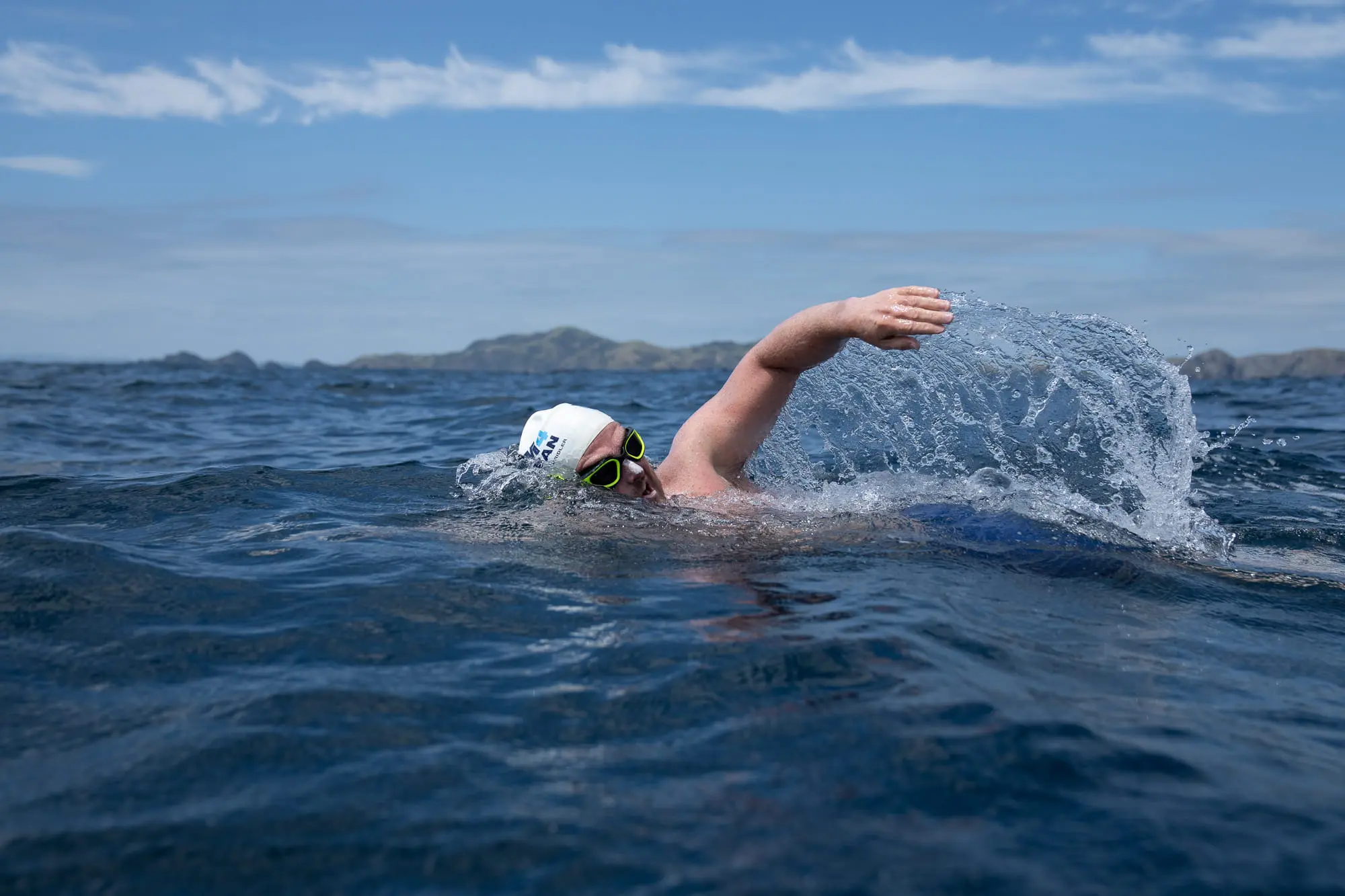
Swim4TheOcean is a world record attempt for the longest unassisted staged swim (no wetsuit or other aids). The journey begins at the very top of the North Island of New Zealand and follows the rugged East Coast all the way to our political capital, Wellington. But this swim is about more than distance. With every stroke, I’ll be carrying a clear message from New Zealanders to decision-makers: it’s time to end bottom trawling – especially on seamounts, both here at home and on the high seas – by the end of 2027.
WHY WE NEED TO PUT AN END TO BOTTOM TRAWLING
Bottom trawling is an industrial fishing technique where huge nets are dragged across the seafloor, sweeping up everything in their path: fish, corals, marine mammals, and entire ecosystems. But because it happens out of sight, the devastation goes largely unnoticed.
I’m often met with disbelief that bottom trawling is still happening in New Zealand, especially on seamounts. A single trawl may last only minutes, but the ecosystems it devastates can take decades, even centuries, to recover. The scale of that damage, and the lack of stewardship, is astonishing. Yet we continue to allow it, fully aware of the destruction it causes.
Ending bottom trawling on seamounts, and planning a rapid phase-out of the practice altogether, isn’t radical. It’s a practical, science-based step governments can take today to protect deep-sea ecosystems and make meaningful progress toward 30×30 commitments. Every delay costs more than we can afford.
DRIVING COLLECTIVE ACTION ON 30X30
We know sport can capture the hearts and minds of a nation, bringing people together to celebrate wins, share losses, and rally around ground breaking achievements. My aim is to use my ability and passion to swim long distances to engage people on issues in a way that points to what we can achieve if we set our minds to it. Endurance swimming requires you to be able to push past the pain, keep your head down, and stay in the game. Swimming one day at a time, I’m motivated by my connection to the ocean and the responsibility to safeguard it for those who come after us.
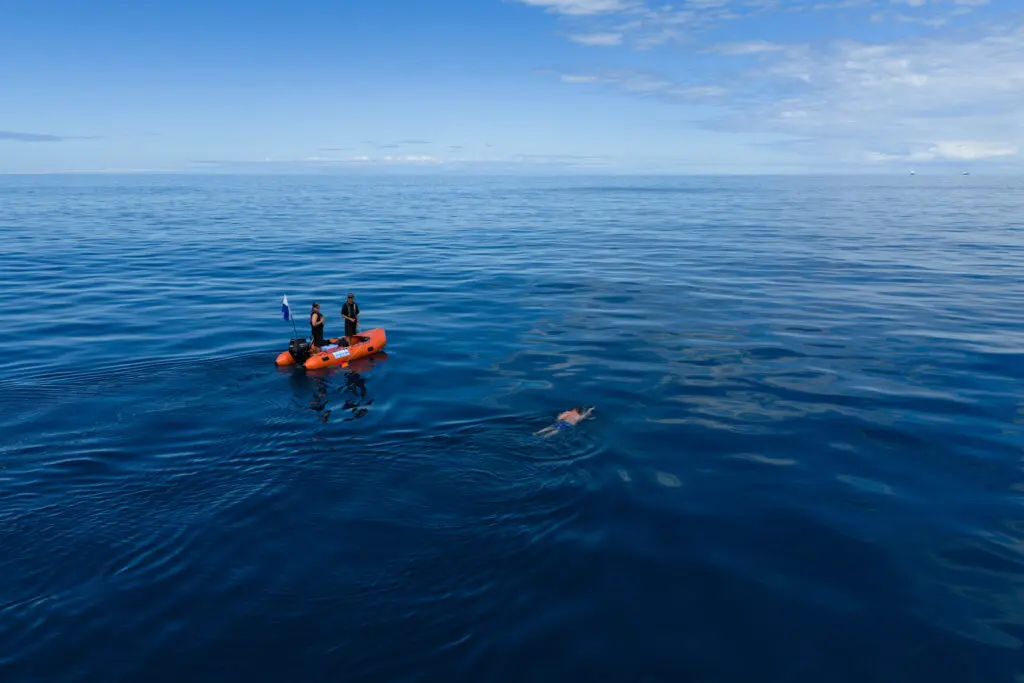
Six weeks into the swim and more than 640 km down the North Island (at the time of writing), we’re steadily making progress. Along the way, I’ve battled nausea, salt tongue, mouth ulcers, sunburn, and a wrist niggle that forced me to swim with a closed fist for a leg. The first month of Swim4TheOcean has offered it all, from a storm-lashed, remote beach start with choppy, murky waters, to a serene, current-assisted “magic carpet” swim at the tip of the Coromandel. I imagine the journey of ocean advocates around the world, campaigning to end bottom trawling on seamounts, in MPAs, and in national waters, has been just as unpredictable and demanding.
Advocates like Lewis Pugh and Neil Agius have used endurance swimming globally to bring audiences to the urgency and commitment needed to drive ocean protection and restoration. In New Zealand, a swim of the scale of Swim4TheOcean is a first in our waters. Two years in the planning, we always hoped the public would come together and support it. Connecting to the coast and its communities was something that we felt was vital for the swim; while it would have been easier to manage the swim from a boat, we made the call early to come ashore at the end of each leg. Seeing the public tracking the swim, welcoming us ashore at boat ramps and beaches, and joining the call to end bottom trawling is something I’ll never forget.
From the very start at Waikuku North Cape, we were farewelled by Ngāti Kuri, who truly understand what ambition for the moana means. In Tāmaki Makaurau Auckland, local iwi Ngāti Whātua Ōrākei welcomed us warmly and along the Coromandel’s east coast at Whangamatā, mana whenua Ngāti Pū gifted me a treasured taonga carved from the jawbone of a sperm whale and guided me for a swim to the center of Whenuakura Island for a blessing, wishing me a safe journey.
There have been countless moments like these that stay with me as I swim; reminders that keep me going when the journey gets tough.
NEW ZEALAND CAN LEAD THE WAY, IF ACTION IS TAKEN NOW
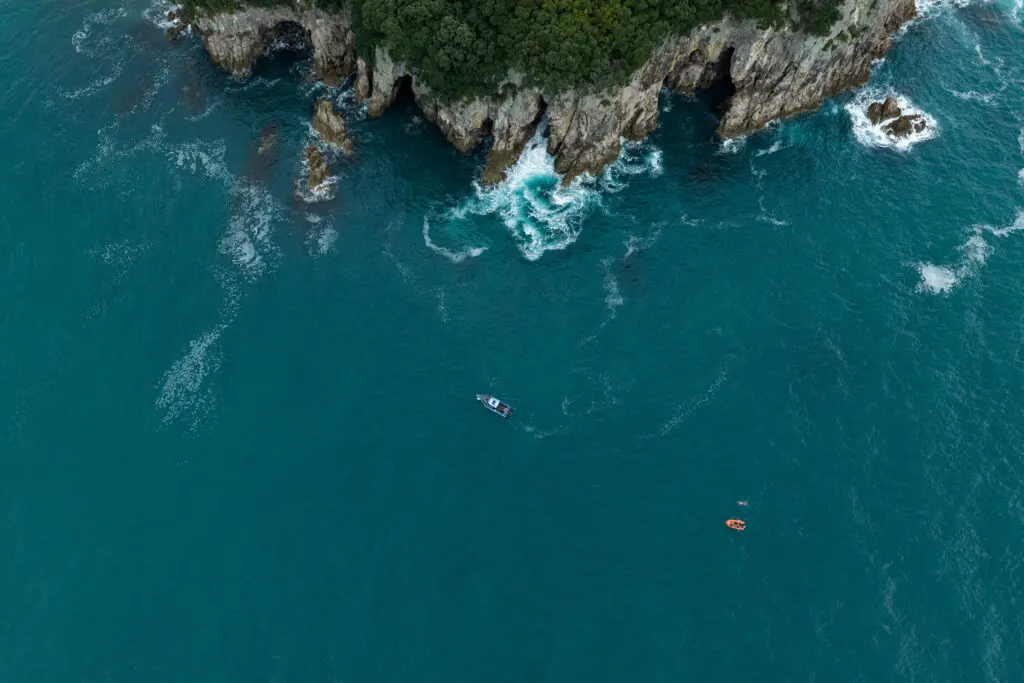
Aotearoa New Zealand is guardian to one of the largest ocean spaces on the planet and also one of the most significant. I have swum in wild places like the Cook Strait Crossing, Foveaux Strait and a 33 hour nonstop swim from Great Barrier Island to Auckland and, even in my own lifetime, I have seen huge change. The Great Barrier Island swim, which we called Swim4TheGulf, was dedicated to protecting the Hauraki Gulf and marked my first partnership with Live Ocean. Decades of work had gone into advancing marine protection there, but the swim helped bring the issue back into the spotlight. It was incredibly special to hear our Minister for Conservation reference it when the law was finally passed.
In New Zealand, our ocean is truly remarkable, stretching from subtropical islands in the north to the icy subantarctic islands in the south. Yet, despite its uniqueness, we haven’t cared for it as we should. As I swim each day, seeing seabirds, sharks and whales, I can’t help but wonder how many more I would have seen 100 years ago. I worry about how many my daughter will see when she is an adult if New Zealand continues to turn its back on ambitious ocean protection.
Endurance swimming teaches you something simple: you don’t get results by sprinting. You get them by committing, day after day, even when conditions turn against you. Ocean protection is no different.
As I keep swimming south, I’m asking decision-makers in New Zealand and around the world to show the same resolve that endurance demands. Stay in the water. Make the hard calls. And choose long-term, effective protection while there is still time.
The call to action for Swim4TheOcean is supported by Live Ocean and its founders Peter Burling and Blair Tuke and the Deep Sea Conservation Coalition (DSCC) and its members. The DSCC works with scientists, NGOs and governments around the world to protect the deep sea.
About the author
35 year-old Jono Ridler from New Zealand is an ultra-marathon swimmer and a champion for a healthy ocean. In May 2023, Jono smashed the New Zealand record for the longest, unassisted, continuous open-water swim - swimming almost 100kms non-stop, no wetsuit, from Karaka Bay, Aotea Great Barrier Island to Campbells Bay, Auckland. It was a Swim4TheGulf; a swim done in partnership with Live Ocean to raise awareness for the declining health of Tīkapa Moana, the Hauraki Gulf. Before then Jono had already knocked off the New Zealand Triple Crown of Open Water Swimming - made up of Cook Strait, Lake Taupō, and Foveaux Strait – one of only 14 to have done so.
Related content
 Four years to 2030: scaling effective ocean protection
 The legal fight for Europe’s marine protected areas
 A Turning Point for Ocean Protection in Ghana
Share this article
using #ForTheOcean