Waves of Change: Youth Voices Driving the 30×30 Ocean Movement
When I first heard about 30×30 – the global goal to protect at least 30% of land and ocean by 2030 – it sounded like just another distant target; a simple number in a policy document. But the more I learned, the more I began to understand that it is much more than a statistic; it is a promise to right our wrongs, to respect the planet we call home and to shift how we see and care for the ocean
Today, 30×30 is gaining momentum worldwide. Governments are making pledges, marine protected areas are being established (MPA) at scale, the High Seas Treaty has entered into force, and ocean protection is finally on political agendas. But beyond speeches and signatures, a powerful force is shaping what 30×30 will truly mean: young people learning, questioning, organizing, and demanding protection that is meaningful, not just on paper.
YOUTH AND THE OCEAN: WHY 30X30 MATTERS
For my generation, the ocean is not a distant horizon – it’s where our future is being written. We are growing up amid a climate and ocean in crisis, watching the line between hope and loss shift with every tide. The choices being made today will shape the world we inherit: whether MPAs actually safeguard biodiversity, whether fisheries thrive or collapse, and whether ecosystems survive or disappear before our eyes.
That’s why 30×30 matters so much to us. It’s one of the last chances in our lifetime to move from managing decline to enabling recovery. But this will only happen if it’s done right.
Around the world, youth are actively restoring coastlines, running awareness campaigns, engaging fishers, and turning complex science into stories that can be understood by people of all ages, all backgrounds, and from diverse walks of life. Programs like EarthEcho International’s Ocean Protection Ambassador initiative equip young leaders to connect global commitments like 30×30 with local action. We aren’t just learning what ocean protection means, we are practicing it: engaging our communities, advocating for stronger protections, and ensuring that conservation reflects both science and social equity.
FROM COMMUNITY ACTION TO GLOBAL IMPACT
One of the most powerful things about youth-led ocean action is how easily it can move between scales.
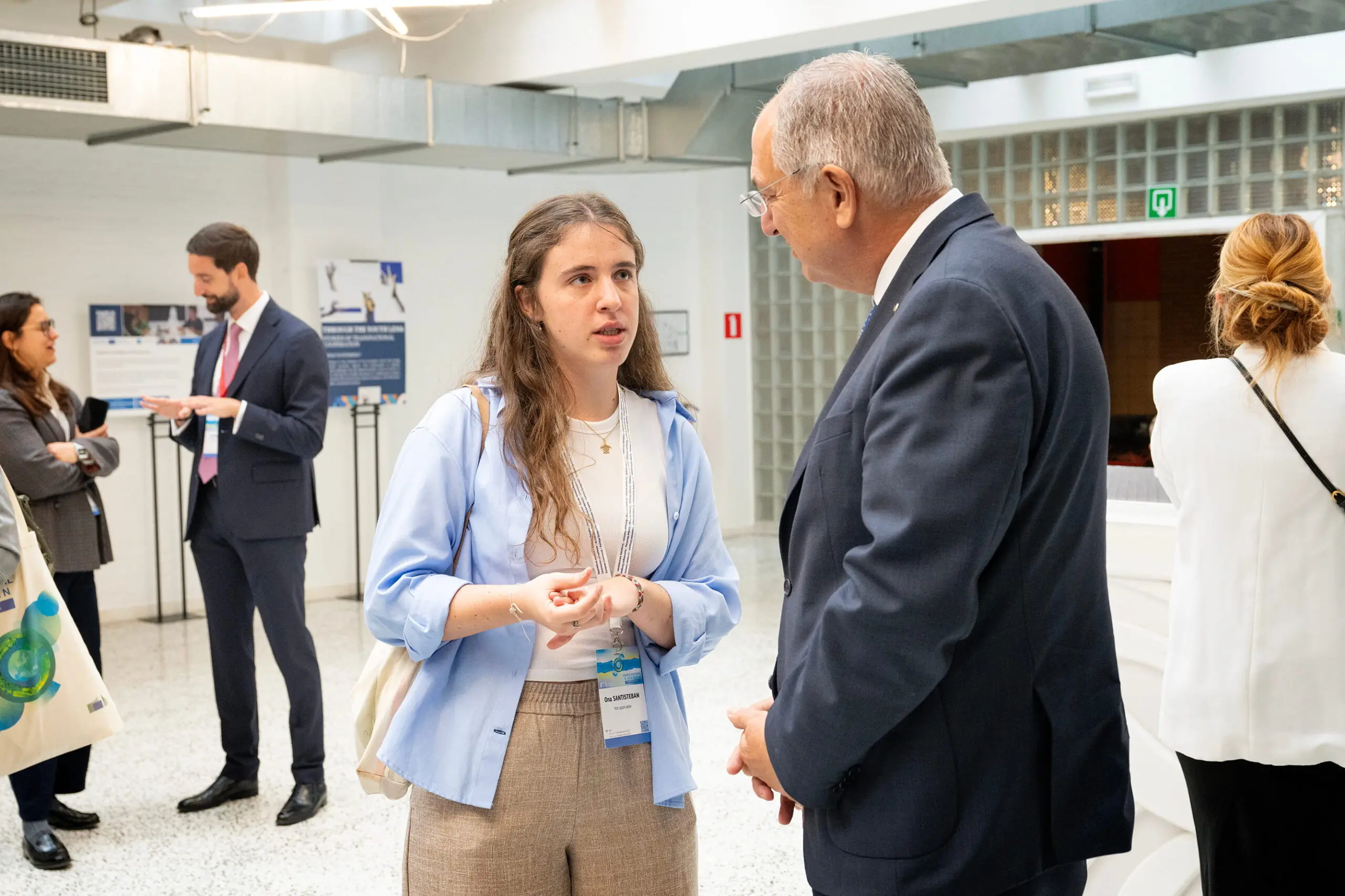
As an EarthEcho Ocean Protection Ambassador, I began by working at the community level, collaborating with marine scientists and local stakeholders in Europe to better understand how MPAs function in practice. Much of my work focused on turning dense scientific research into simple, engaging educational tools that other young people could actually understand and use.
That local grounding became invaluable when I entered policy spaces. At regional and international forums, including the Macro-regional & Sea Basin Strategies Days, I shared concrete examples from lived experience. Alongside fellow ambassadors, I coordinated a joint youth letter calling for a ban on bottom trawling in EU MPAs that I was able to hand directly to the Commissioner for Fisheries and Oceans. What makes youth advocacy powerful is precisely this spirit of collaboration – our shared focus on impact over ego and on purpose over politics.
Young people also bring something valuable to these spaces: honesty. While some institutions can hesitate to call out hard truths, we speak directly and transparently about what isn’t working. That clarity helps bridge the gap between lived experience and policy, keeping ocean governance accountable, human, and open to solutions that might otherwise be overlooked.
YOUTH VOICES IN OCEAN POLICY AND GOVERNANCE
Youth voices are no longer silent in global ocean governance. We are now a visible presence – at climate COPs, the Our Ocean Conference, the UN Ocean Conference, and regional policy dialogues – representing the generation that will live with the outcomes of 30×30 ambition and every decision made today.
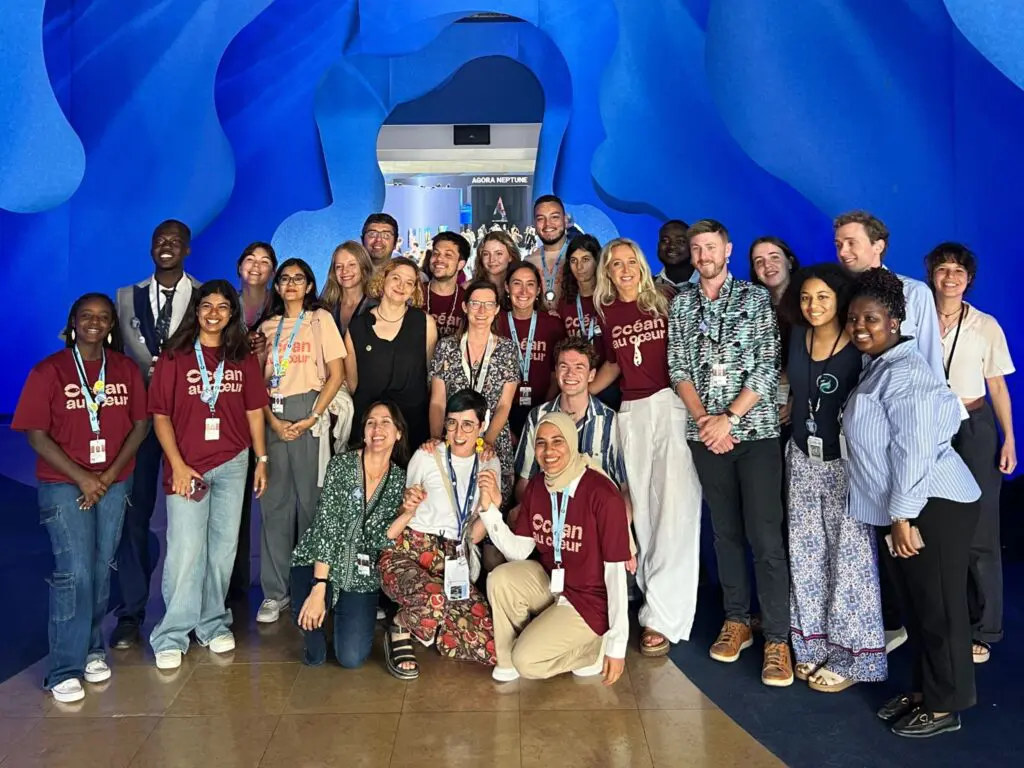
For me, the 2025 UN Ocean Conference in Nice was a turning point. Walking into the plenaries and side events, I felt the scale of global coordination happening in real time. But what struck me most was the community of young ocean leaders, meeting passionate peers from every continent, sharing struggles and strategies, and witnessing the launch of the Coalition of Emerging Ocean Leaders (CEOL). That week I wasn’t just observing global processes, I was part of conversations that brought youth perspectives into policy spaces alongside ministers, scientists, and NGOs.
This visibility matters. It shows that years of persistence are paying off. But being seen is not the same as being heard. Too often, youth roles remain symbolic: we’re invited to speak but not to decide, quoted as “leaders of tomorrow” while still struggling to influence the decisions being made today. Even so, we keep pushing for more than visibility, for meaningful participation and co‑creation in decisions that shape the ocean’s future.
INTERGENERATIONAL COLLABORATION: STRONGER TOGETHER
Intergenerational collaboration is not about compromise, it’s about complementarity. Young people bring urgency, creativity, and the ability to mobilize communities at lightning speed. Older leaders bring institutional knowledge, access, and experience in navigating complex systems. When these strengths combine, they create momentum that neither group could achieve alone.
WHAT 2026 MEANS FOR YOUTH OCEAN ACTION
This year is a turning point. The High Seas Treaty entering into force marks a historic moment after decades of negotiation, a testament to what persistence across generations can achieve. At the half-way point of this decade, young people are ready to implement the promises of this Treaty while scaling support for 30×30 globally.
In 2026, youth leaders from EarthEcho International’s Youth Ambassador programs will push governments to move from commitments to action – engaging in key global policy events and forums including the Our Ocean Conference, CBD COP17, and the UNFCCC COP31 meeting, as well as national policy spaces, to help shape how 30×30 is realized. Our focus is clear: supporting the creation of new, well-designed protected areas, advancing the implementation of the High Seas Treaty to safeguard biodiversity beyond national borders, and strengthening the quality of existing MPAs so they deliver real ecological and social benefits.
As 2026 unfolds, youth are not watching this moment from the sidelines. We are stepping into it by helping define what meaningful ocean protection looks like, and ensuring that the promise of 30×30 becomes lasting protection for generations to come.
THE SUCCESS OF 30X30 RELIES ON INCLUSION
The success of 30×30 won’t only be measured by percentages on a report card. It will be measured by whether young people are truly empowered and included not as symbolic figures, but as partners.
Governments, NGOs, and industry must stop treating youth as “the next generation” and start working with us as this generation: one already researching, restoring, and reimagining the ocean’s future. That means sharing responsibility, funding youth‑led initiatives, and opening the door to co-creation at every level of decision-making.
We are not waiting for hope, we are building it. Across communities and continents, young people are proving that 30×30 can be more than a policy goal. It can be a living promise: a thriving ocean worth inheriting.

About the author
Ona Santisteban Uribarri is a Spanish marine conservationist and Biology student at Sorbonne Université. She blends science, GIS, and storytelling to drive action for the ocean. After completing an externship with the National Geographic Society and The Nature Conservancy, she received seed funding to develop a project connecting fishers and scientists to reduce bycatch, earning recognition as a Young Ocean Advocate by the European Commission. As an Ocean Protection Ambassador with EarthEcho International, she has led awareness campaigns on bottom trawling and Mediterranean biodiversity. Ona combines science, storytelling, and collaboration to turn ocean challenges into collective solutions.
Related content
 30×30 is within reach – but the greatest gap is at sea
 Four years to 2030: scaling effective ocean protection
 The legal fight for Europe’s marine protected areas
Share this article
using #ForTheOcean