Why Capacity Development Determines the Future of Ocean Protection
Marine protected areas (MPAs) are among the world’s most effective tools for safeguarding biodiversity and supporting human wellbeing. But MPAs do not manage themselves – people do. Their success depends entirely on the people and systems that bring protection efforts to life.
OCEAN PROTECTION PULSE CHECK
Early in my career, I witnessed the promise of MPAs firsthand while supporting the Sasanhaya Fish Reserve off Rota in the Commonwealth of the Northern Mariana Islands that lie in the Northwest Pacific Ocean. In that serene corner of Sasanhaya Bay, I saw the astonishing potential of MPAs to restore ecosystems and sustain communities. But I also learned a harder truth: an MPA is only as strong as the individuals, institutions, and other resources behind it.
Today, 9.9% of the world’s ocean is designated as protected, but only 35% of MPAs report sufficient funding levels and only 9% report adequate staff for management. Many MPAs exist only on paper, established with good intentions but left without the resources needed to deliver real ecological and social benefits. As the world races toward protecting at least 30% of the ocean by 2030 (30×30), we cannot keep creating MPAs that live solely on a map.
Marine conservation is not just about biology, it is also about communities and culture. If we want healthy, impactful MPAs that deliver lasting benefits, we need to invest in the people and systems responsible for managing them.
CAPACITY DEVELOPMENT IS A SHARED JOURNEY
If we are to reach the global 30×30 target in a fair and effective way, the world needs major investment in human skills and institutions. From local communities to regional networks and national agencies, success depends on a strong, prepared workforce and organizations that embed capacity into everyday management.
Historically, capacity development has been thought of as training to acquire new knowledge and skills, with an outdated model of “capacity building” often involving experts prescribing solutions. Today, that understanding has evolved. The focus has shifted towards “capacity sharing” with a collaborative process, multi-directional knowledge exchange, and mutual benefits.
Lasting success depends on recognizing and supporting local leaders, including their essential expertise, traditional knowledge, and deep cultural ties to place, while also providing opportunities to learn from MPA managers facing similar challenges in other contexts. With many managers working alone, overwhelmed, and without the time or resources to try new solutions, this support is urgently needed. Altogether, building true, long-term capacity requires:
- Organizations grounded in effective, equitable structures and systems to enable a well-prepared workforce.
- A systemic or future-focused mindset that is rooted in shared values, trust, and collaboration.
- Durable policy and financing to clear pathways for sustainability.
Despite the need for systemic action, funding is often aimed at rapid fixes for ineffective “paper park” MPAs, only funding isolated site‑level improvements that rarely create broader change. As with education and healthcare systems, holistic support across all levels is critical to create and sustain protected areas.
COLLECTIVE ACTION FOR MPA SUCCESS
In 2023, the Blue Nature Alliance brought together global thought leaders to co-design how to scale MPA capacity to reach 30×30. This collaboration grew into the MPA Capacity Community of Practice (CoP), formally launched at the UN Ocean Conference in 2025 (UNOC3).
The CoP connects more than 30 MPA capacity development practitioners, across universities, NGOs, government, and donors. Together, they take a systems approach – linking global, regional, and local efforts – to tackle the structural barriers that continue to limit effective MPA management. Rather than duplicating efforts, the CoP provides a space to share learning, align approaches, and strengthen collective impact. Remarkable momentum has been built, with regional workshops and engagement in the Western Indian Ocean, East Asia and the Caribbean.
The CoP is working across several high-impact areas that are widely recognized as essential to strengthening the workforce and building resilient systems and governance:
- Long-term strategic investment: Government, non-profit leaders and funders align around sustained investment, enabling MPA systems to grow stronger over time and reducing chronic dependence on short‑term philanthropy.
- Inclusive and locally grounded governance: Communities and local stakeholders play a central role in decision‑making and day‑to‑day management, ensuring MPAs reflect local priorities, knowledge and values.
- Strong organizations and networks: Institutions have the tools, resources, and support systems needed to continuously build, retain, and sustain capacity across regions and generations.
- Locally led and durable financing: Funding and decision‑making shifts toward locally led, coordinated, and long-term models, strengthening stewardship and enabling lasting conservation outcomes.
TURNING AMBITION INTO ACTION
The world has ambitious goals for ocean conservation yet progress remains far off pace. This moment demands a shift from ambition to action – scaling up high‑quality management, inclusive governance, and strong institutional support.
Alongside partners, including Together for the Ocean and the MPA Capacity Community of Practice, the Blue Nature Alliance is working to close the implementation gap and ensure that 30×30 results in real, lasting, and equitable protection – not just more lines on a map.
Delivering this protection requires confronting a critical and overlooked challenge: chronic underinvestment in the people who manage and sustain MPAs. Later this year, findings from a first-of-its-kind Global Marine Workforce Study will be released, revealing the severe staffing gaps faced by MPAs worldwide and providing vital evidence to inform investment, policy, and action.
Ultimately, durable ocean protection depends on people. Investing in them is the most important conservation action we can take.
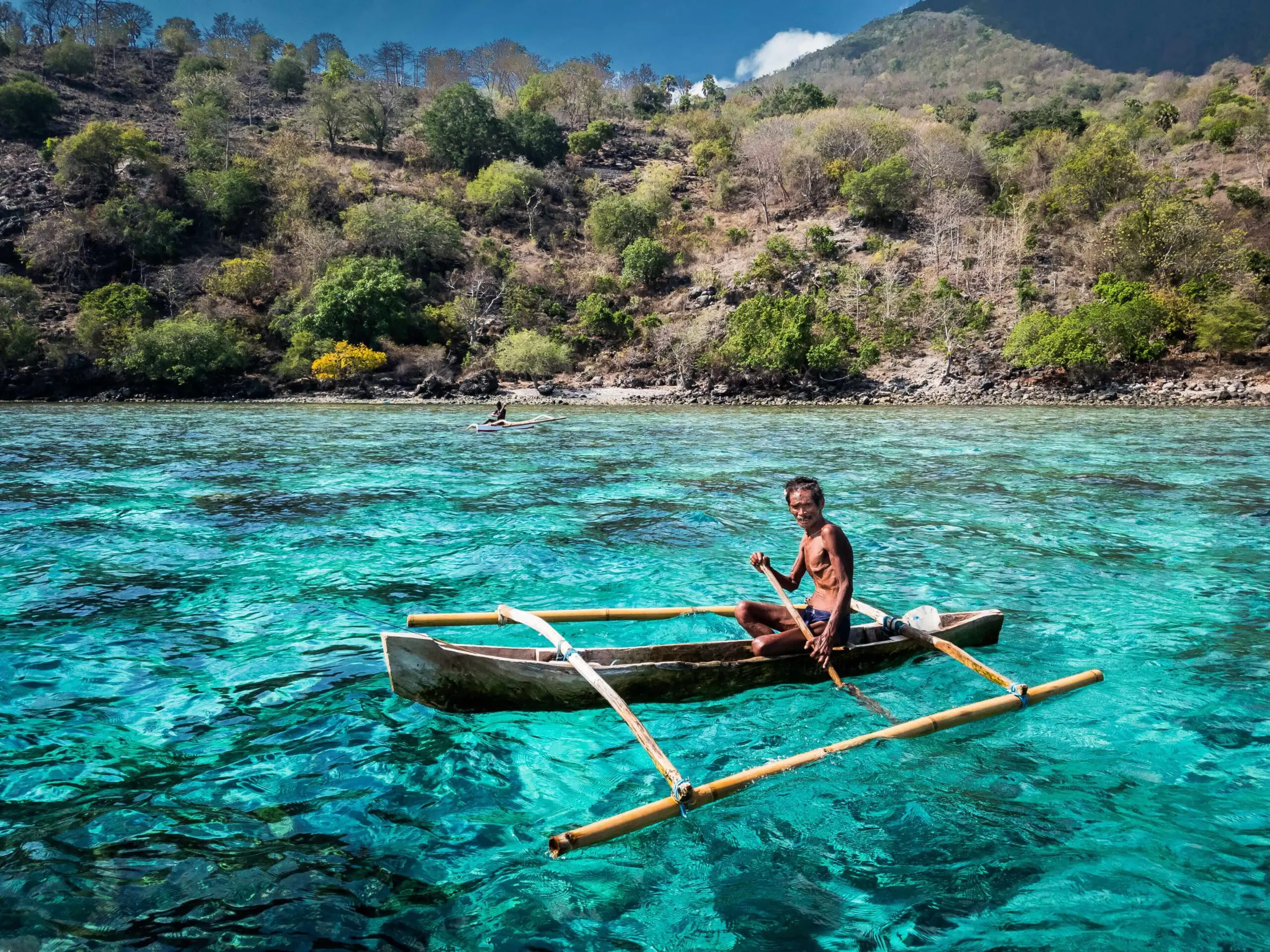
Header image credit: Erik Lukas / Ocean Image Bank

About the author
Lihla Noori leads Capacity and Learning at the Blue Nature Alliance, where she drives efforts to strengthen durable marine protected area (MPA) support systems around the world. She leads investments in regional and global partnerships, innovative capacity‑building approaches, and knowledge resources that help communities and practitioners create lasting ocean conservation outcomes. With more than 20 years of experience in conservation capacity building, partnership development, and philanthropy across Micronesia, the Caribbean, and Hawai‘i, Lihla has dedicated her career to empowering local leaders and organizations. Lihla holds a B.S. in Environmental Studies and an M.S. in Experiential Education, and she pursued postgraduate coursework in Marine Resource Management at James Cook University and the University of Guam. After two decades of island hopping, Lihla has made Hawai’i home for the past15 years. Happiest in the ocean, she spends most of her time Ubering her Irish twin boys to soccer and showing them that the “world is their oyster.”
Related content
 Four years to 2030: scaling effective ocean protection
 The legal fight for Europe’s marine protected areas
 A Turning Point for Ocean Protection in Ghana
Share this article
using #ForTheOcean