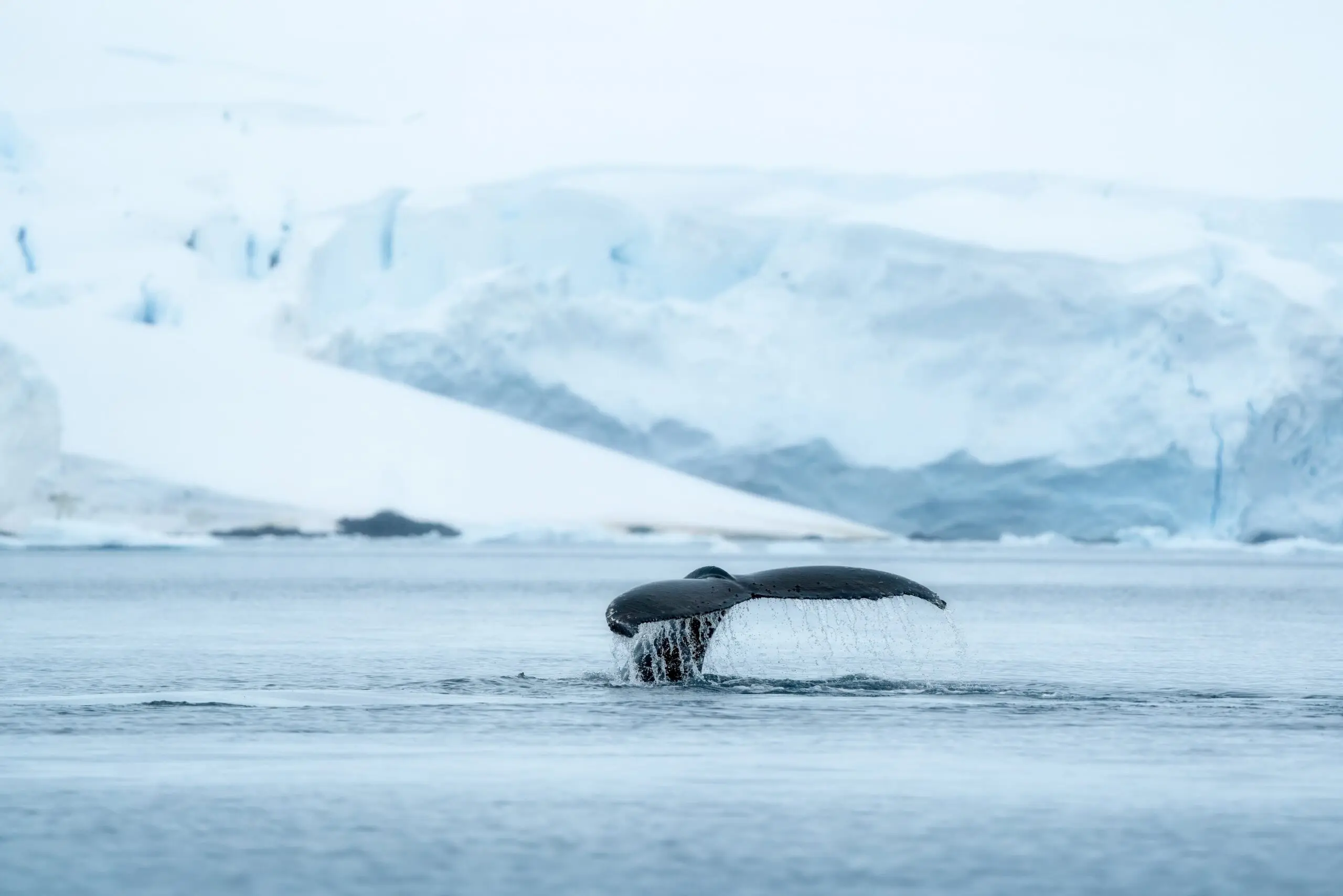
Antarctic ecosystems on the line: what CCAMLR 2025 means for the Southern Ocean
As the world watches the climate negotiations unfolding at COP30 in Brazil, another important series of environmental negotiations taking place on the other side of the world has just ended. The Commission for the Conservation of Antarctic Marine Living Resources (CCAMLR) is the international body responsible for the conservation of Antarctic marine ecosystems and the management of fishing in the Southern Ocean. Every year CCAMLR meets in Hobart, Australia for two weeks to consider key questions on the management and conservation of the Southern Ocean and Antarctica. This year’s meeting highlighted deep divisions over how best to protect the Antarctic Peninsula, and the tiny species at the heart of its ecosystem: krill. But as momentum builds, countries and conservationists are already preparing to make a difference next year.
INSIDE CCAMLR-44
At the heart of this year’s CCAMLR meeting were two intertwined issues: a proposal to establish a marine protected area (MPA) for the Antarctic Peninsula and the management of the krill fishery that overlaps much of the same area.
Antarctic krill are a small, shrimp-like crustacean that form the base of the Antarctic food web. From whales to penguins to seals, nearly everything in Antarctica eats krill or eats something that eats krill. Krill is not only important as a food source, but also for their role in absorbing CO2, storing roughly the same amount of carbon that 35 million cars emit each year.
For years, CCAMLR Members have worked to align marine conservation and fishery interests, recognizing that protecting habitat and managing harvests must go hand in hand. In 2024, negotiations around a new krill fishery management approach and the proposed Antarctic Peninsula MPA showed promise but ultimately collapsed before the meeting’s close. Worse still, a key conservation measure that managed the krill fishery and spread out the catch in a broader area was allowed to expire last year, leading to more concentrated fishing than ever before. Consequently, the krill fishery hit their quota three months early this year, forcing the fishery to close early for the first time ever.
This year, CCAMLR Members sought to adopt new management measures to reduce impacts from concentrated krill fishing while also advancing the Antarctic Peninsula MPA proposal. Unfortunately, the proposal was not agreed (as it requires consensus by all parties) and instead, a small number of Members attempted to expand the krill fishery without adding any new protections for the region. This led to strong pushback from conservation-minded Members including Chile, Argentina, New Zealand, South Korea, the EU and its Member States, and others. Their clear and decisive commitment to the creation of the Antarctic Peninsula MPA stopped the advancement of proposals that would have prioritized extraction over conservation.
While maintaining the status quo was not the ultimate objective of the meeting, it demonstrated the commitment of conservation-minded Members to bring CCAMLR back in step with the world’s ocean protection commitments, in line with the recently ratified High Seas Treaty and the global target to protect 30% of the ocean by 2030.
WHY THE SOUTHERN OCEAN MATTERS
The vitality of the Southern Ocean is critical for global ocean health and climate stability. Scientists estimate that since the 1970s, the Southern Ocean has absorbed as much as 75% of the excess heat and 40% of the carbon dioxide created by humans. Its powerful current also acts as a global ocean conveyor belt that drives key nutrients that feed the global ocean, which in turn provides food for the entire planet and livelihoods for more than 3 billion people who depend on marine and coastal resources. It is also home to incredible biodiversity and ecosystems found nowhere else in the world. While Antarctica may seem far away, the health of the continent and its surrounding waters impact all of us.
Currently, 7% of the Southern Ocean is protected through national MPAs and an additional 6% by two high seas MPAs: South Orkney MPA (designated in 2009-2010, covering 95,000 square kilometres) and the Ross Sea MPA (designated in 2016, covering 2 million square kilometres). Four additional MPAs are under negotiation, covering 13% (4.6M km²) of the Southern Ocean. These include the Antarctic Peninsula, East Antarctic, and Weddell Sea MPAs. Together these would enable the protection of 26% of the Southern Ocean / 2.6% of the global ocean: a major contribution to global conservation goals, including 30×30.
WHAT’S NEXT?
Even though CCAMLR’s annual meeting has only just ended, momentum is already building for 2026. MPA proponents, conservationists, and campaigners are sounding alarm bells over another looming year of concentrated krill fishing in the Antarctic Peninsula. Some retailers aren’t waiting around for CCAMLR and are removing krill products from their shelves voluntarily following pressure from environmental groups like Sea Shepherd. Other NGOs, like WWF, are calling for a moratorium on krill fishing until a highly precautionary and ecosystem-based management framework for the fishery is agreed.
The message is clear – the world is watching. If CCAMLR is to live up to its founding mandate, it must find the will to move past political deadlocks and act decisively for the Southern Ocean, before it’s too late.
For more information, visit asoc.org
Header image credit: Ocean Image Bank, Alex Williams

About the author
Holly Parker Curry is the Marine Protected Areas Campaign Director at the Antarctic and Southern Ocean Coalition (ASOC). For more than 45 years, ASOC has been the leading voice for responsibly managing human activities that threaten Antarctica and the Southern Ocean. As the only environmental NGO invited to observe Antarctic Treaty System meetings, ASOC works at the highest levels of Antarctic governance to effect change from within.
Related content
 Four years to 2030: scaling effective ocean protection
 The legal fight for Europe’s marine protected areas
 A Turning Point for Ocean Protection in Ghana
Share this article
using #ForTheOcean