Four years to 2030: scaling effective ocean protection
The global commitment to protect at least 30% of the ocean by 2030 transformed the scale of ambition for marine conservation. Since its adoption in 2022, governments around the world have taken steps to turn that ambition into action with new protected and conserved marine areas proposed. The High Seas Treaty also came into force, creating a once-in-a-generation pathway to protect biodiversity beyond borders.
With four years remaining, the most challenging phase of 30×30 is coming into focus: turning commitments on paper into conservation that works on the water. At the time of writing, just 10.3% of the global ocean is designated for conservation. But, critically, coverage alone provides an incomplete measure of progress. At least half of existing designated areas are considered unimplemented or operationally ineffective. Without sufficient capacity for implementation, expanding coverage risks multiplying “paper parks”: areas that appear protected on a map, but are not in reality.
We therefore need to pursue two objectives at once. Governments must accelerate the establishment of marine protected areas (MPAs) and other effective area-based conservation measures (OECMs) within national waters and beyond national jurisdiction, while also ensuring that protected areas work in practice.
FROM DESIGNATION TO EFFECTIVE IMPLEMENTATION
This is the challenge examined in Closing the Implementation Gap: Capacity Development for Effective Marine 30×30, a report from the Smithsonian Tropical Research Institute (STRI). Drawing on research and stakeholder dialogues conducted last year, it asks what is needed to turn designation into durable, effective protection.
Capacity development is a central part of the answer.
The report highlights opportunities to develop new and build on existing capacities across six areas: governance, funding, engagement, technology, socio-ecological integration, and communication.
These also include better coordination and sharing of experiences across sectors, as well as designing actions that are tailored to local norms and cultures. The objective is not to export or promote a single model of marine conservation. Capacity development should enable communities, governments and scientists to adapt proven approaches to their own ecological, cultural, and economic context.
INVESTING IN PEOPLE AND BUILDING TRUST IN TECHNOLOGY
Effective protection depends on creating ways for practitioners to develop the skills needed to manage protected areas. This means more than workshops or short-term interventions; it requires professional networks, mentorship, accreditation, and sustained support.
The Western Indian Ocean Certification of Marine Protected Area Professionals (WIO-COMPAS) program demonstrates what this can look like, combining certification, peer learning, mentoring, and applied management skills. The result is not simply a group of people who have completed training. It is a community of practitioners who share knowledge, support each other, and are capable of responding to evolving conservation challenges.
Moreover, the Coral Triangle Center illustrates the importance of adapting capacity development to local realities. Since 2010, its capacity-building programs have trained more than 8,200 stakeholders across six Coral Triangle countries – Indonesia, the Philippines, Malaysia, Solomon Islands, Papua New Guinea, and Timor-Leste – including government representatives, academics, NGOs, community leaders, and private sector actors directly involved in managing marine resources. Through training on MPAs, sustainable fisheries, conservation governance, and leadership development, alongside regional training and peer learning, the Center strengthens the skills and networks needed for effective marine stewardship. This helps practical experience and locally grounded approaches travel across one of the world’s most biodiverse marine regions.
Technology can also strengthen implementation. For example, from Brazil to the Philippines, the successful use of Rare’s FishMAT platform has helped users analyze fisheries. Helping managers to identify drivers of change in fisheries and turn biological, economic, and governance data into science-based recommendations, FishMAT makes complex information more actionable for communities and local governments. But technology is only effective when people have the skills to use it. Without investment in the people who will put it into practice, its potential risks going unrealized.
FINANCING THE SOLUTION
None of these approaches can succeed without durable financing.
Meeting 30×30 will require donor governments, multilateral institutions, and other financial partners to mobilize sufficient resources as part of the wider commitment to provide $200 billion annually for biodiversity by 2030, including $30 billion in international biodiversity finance. Indigenous Peoples and local communities also need direct access to a greater share of those resources. A coordinated effort across sectors can help direct these resources towards the capacity development and sharing needs best suited for each unique context.
The Sustainable Finance Coalition demonstrates how government, conservation and finance stakeholders can develop longer-term financial mechanisms for ocean protection. Financing an MPA without providing for its management, monitoring, enforcement and community engagement simply shifts the implementation problem into the future. Capacity development therefore needs to be treated as a core part of investment in marine protection.
SCALING WHAT WORKS
The remaining distance to 30×30 in the ocean is significant. The world must protect roughly another fifth of the ocean whilst improving the effectiveness of areas already designated. These are not competing priorities. Protecting more ocean without ensuring that protection works will not deliver the biodiversity outcomes at the heart of the target. The actions we scale must therefore evolve.
Governments should continue to be held accountable for how much ocean they protect, but increasingly, the relevant questions are whether those areas are financed, adequately staffed, monitored, and effectively managed – and whether the people most closely connected to them play a meaningful role in their stewardship. For NGOs and civil society, that requires more than maintaining pressure for new commitments; it also means helping to build the infrastructure and capacities needed.
The political architecture for effective marine conservation is largely in place. The next test is whether the international community can build the human, institutional, and financial capacity to deliver it.
The knowledge exists. The next four years are about putting it to work.
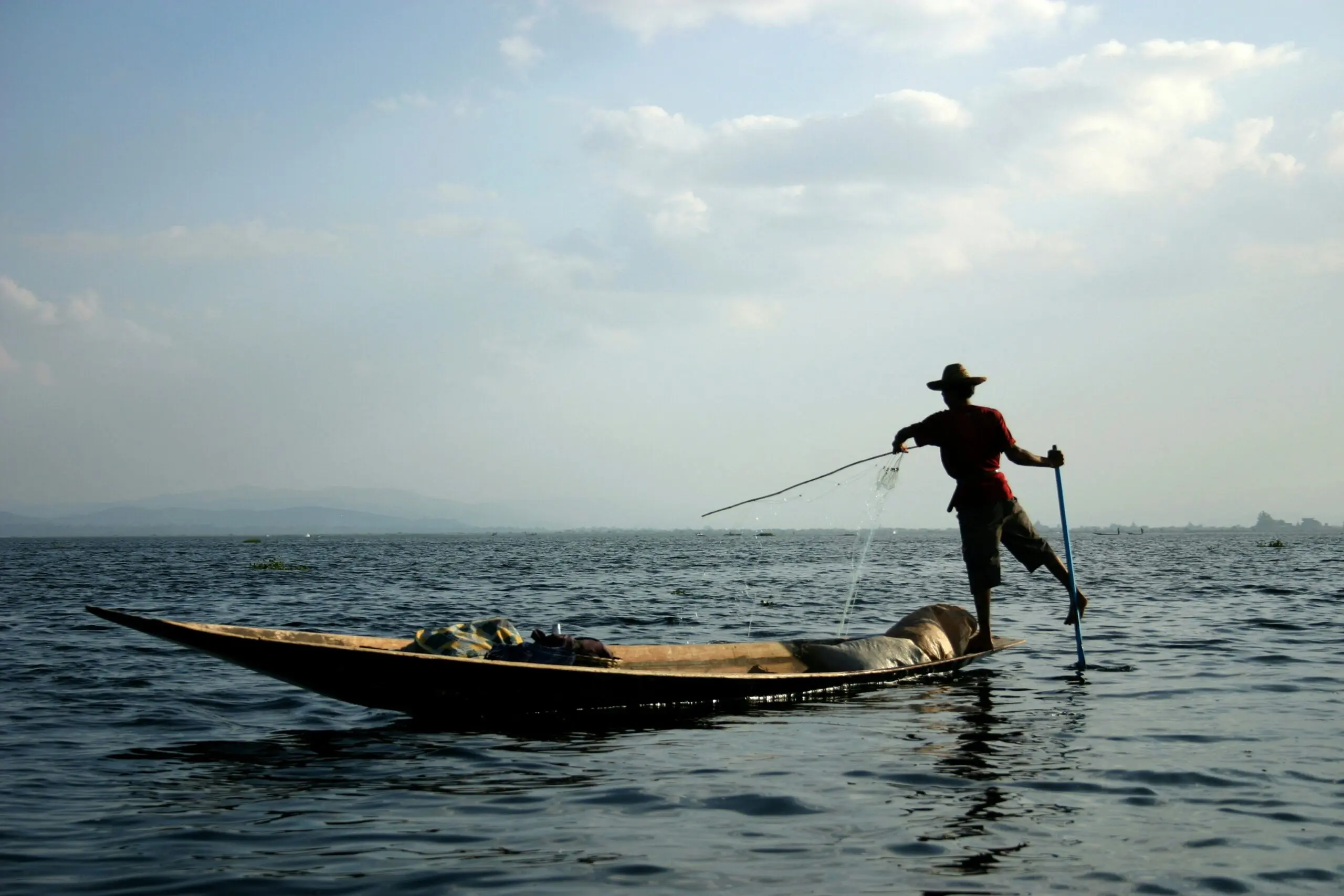
Header image: A local fisherman balances at the end of narrow canoe. Source: Unsplash.

About the author
Dr. Ana Spalding is the Founding Director of the Adrienne Arsht Community-Based Resilience Solutions Initiative at the Smithsonian Tropical Research Institute in Panama; and holds a courtesy faculty appointment at Oregon State University. With interdisciplinary expertise spanning economics, marine affairs, and environmental studies, Ana brings two decades of experience in international development and marine conservation. Ana’s research delves into drivers of global change and their impacts on vulnerable communities, understanding adaptation as a pathway to resilience, and supporting coastal community-based solutions. Through interdisciplinary approaches, she advances resilience science, focusing on marine resource-dependent communities in the US and across the global tropics. Committed to collaboration, she works towards innovative solutions to social-environmental challenges in ocean governance.
Related content
 The legal fight for Europe’s marine protected areas
 A Turning Point for Ocean Protection in Ghana
 Community waters: How Honduras is advancing 30×30 in the ocean
Share this article
using #ForTheOcean